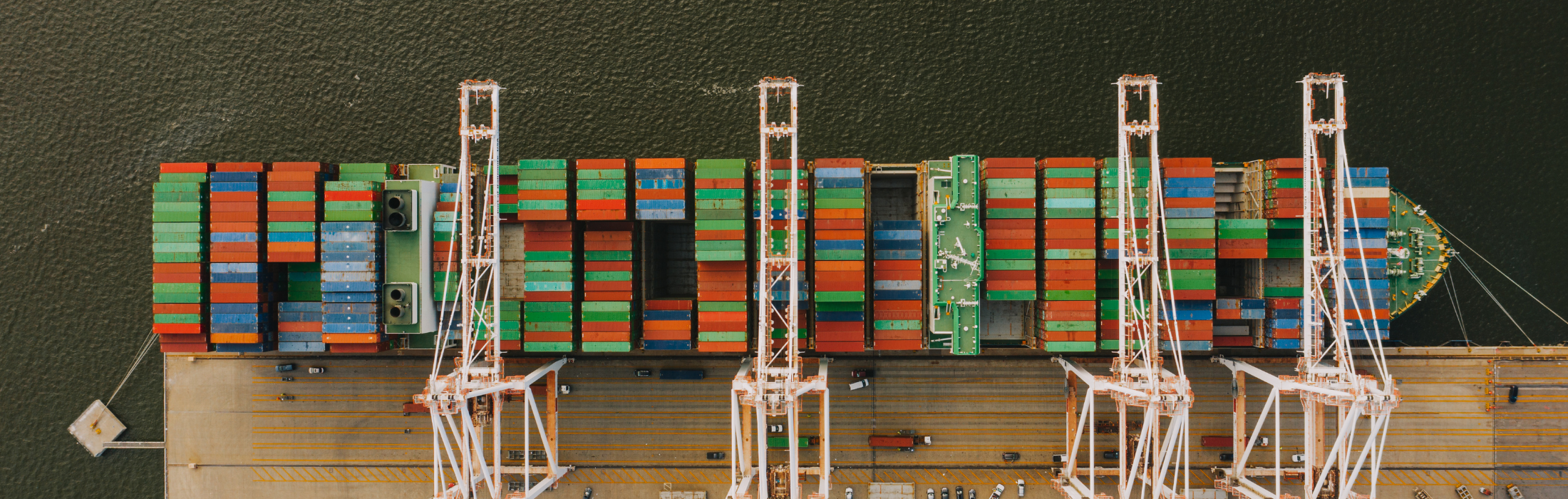
When we think about international trade, we traditionally think about a person or company producing all elements of a product in their home country and then exporting a final product to a consumer in a different country.
This type of trade, however, only represents about 30% of goods and services trade today; the majority of trade (70%) is actually in intermediate parts, components, and services that form segments of global value chains (GVCs). The process of producing goods is often spilt across countries, with different elements carried out wherever the necessary skills and materials are available at competitive cost and quality.
For example, a T-Shirt may be manufactured in Viet Nam using fabric imported from the United States, and then exported to Canada to sell in local retail markets. At the other end of the technology spectrum, producing a smart phone requires many complex components sourced from all over the world, including for example, computer code from France, silion chips from Singapore, precious metals from Bolivia, and graphic design from the United States. While the final product may be assembled in China and then shipped to consumers all around the world, this example reveals that many products we think of today as being made “somewhere” are in fact the result of efforts by firms and individuals in many countries.
Traditional trade statistics do not capture this reality, which is why the OECD launched an initiative to measure trade in “value added” (TiVA) terms, deepening our understanding of how trade actually works. Using TiVA, we can better identify how much value each country and industry adds to a final product along the global supply chain. This approach provides a much more accurate picture of trade balances between countries and the contribution of trade to income and employment. Taking the example of the smart phone, traditional trade statistics would attribute 100% of a final Apple iPhone assembled in China to Chinese exports, whereas a value-added approach shows that China actually only retains around 4% of the total value of the iPhone – the rest of the value is attributed to other countries that provide inputs all along the supply chain.
This new sharing of production across countries has enabled many more countries to participate in global trade, with developing countries increasing their share of global exports and imports. While the new environment for trade creates new opportunities, it also increases the costs of trade barriers.
When goods and components cross borders many times in GVCs, even small tariffs can add up, and the costs of inefficient border procedures are multiplied. Trade facilitation –the transparent, predictable and straightforward procedures that expedite the movement of goods across borders – is becoming ever more important, and is especially critical for trade in perishable agricultural products or high-tech manufacturing components, both of which are highly sensitive to delays. Trade facilitation is becoming even more important in the digital era.
TiVA data also highlight how important services are to global trade. Services represent more than 50% of total global exports, and over 30% of manufactured goods exports and around 25% of agri-food exports in value added terms. This means that efficient services sectors are not just important in their own right – services contribute to as much as 80% of GDP in some countries – but they are also essential to a country’s competitiveness in other sectors as well.
Even though services generate more than two-thirds of global GDP, employ the most workers in major economies, create more new jobs than any other sector, and are critical to competitiveness, obstacles to trade in services remain pervasive. Regulatory reforms and liberalisation of trade and investment in services are needed to enhance competition and increase the productivity and quality of services.
Indeed, international trade can be strongly impacted by non-tariff barriers that originate from domestic regulations, or from limitations to foreign investment. The challenge is to meet policy objectives in ways that maintain the gains from trade.
Digital techonologies and related new business models are also now changing the way we trade. Digitalisation reduces the cost of engaging in international trade, connects a greater number of businesses and consumers globally, helps diffuse ideas and technologies, and facilitates the co-ordination of GVCs.
But even though it has never been easier to engage in trade, the complexity of international trade transactions has increased dramatically, posing new challenges for firms, individuals and governments. Emerging technologies like 3D printing are poised to further change how we trade in the future.
In this fast-evolving environment, challenges involve ensuring that the opportunities and benefits from trade can be realised and shared more inclusively. How countries trade with each other matters.
Rules of the road: the international trading system
Today’s multilateral trading sytem can be traced to the aftermath of World War II, when the desire for peace led governments to establish mechanisms for deeper economic co-operation. The General Agreement on Tariffs and Trade (GATT) was signed by 23 founding members in 1948.
Over the years, successive rounds of multilateral negotiations further reduced tariffs and new members joined the GATT. The Uruguay Round of trade negotiations concluded in 1993, establishing the World Trade Organization (WTO) to replace the GATT as a governing structure for global trade. The birth of the WTO in 1995 established new procedures for settling disputes and marked the first time global rules were set for agriculture, trade in services, and intellectual property.
WTO members launched the Doha Development Agenda (DDA) in 2001 with a goal of advancing trade rules and market opening, notably in agriculture, non-agriculture market access, and services. Following more than a decade of impasse, in 2013, WTO members reached agreement on the Trade Facilitation Agreement (TFA).
Notwithstanding this slow progress, the multilateral trading system remains critical to global prosperity. WTO rules helped to prevent a slide into a 1930s-style trade war that would have greatly exacerbated the global economic crisis a decade ago. Changes in the global economy and the slowdown in trade call for strengthening the WTO. There are a number of ongoing efforts to strengthen and modernise the WTO, in particular with respect to its monitoring and surveillance functions, its dispute settlement function, and negotiations to ensure that firms in all countries are competing on a level playing field.
Today, the WTO still sets the basic rules of the game for cross-border trade in over 160 countries, and is complemented by a growing number of bilateral and regional trade agreements (RTAs) that tend to include deeper and wider commitments to integrate markets. In fact, more than 290 RTAs notified to the WTO are in force today (figure), and more than 30 new agreements are under negotiation.
Although RTAs operate alongside global multilateral agreements under the WTO, many are developing in ways that go beyond existing WTO multilateral rules, and have created a “spaghetti bowl” of preferential agreements. Areas covered by many new RTAs – from investment, to the movement of capital and persons, to competition, to e-commerce – are essential policy issues that must be addressed in today’s more interconnected markets. To the extent that they go beyond commitments made in the WTO and remain open to additional participation by countries committed to meeting their standards, RTAs can complement the multilateral trading system.
Governments have put a lot of effort into establishing and maintaining a global trading rulebook over the past 70 years; progressively opening markets and deepening economic integration. Learn more about why open markets matter to better understand their motivation.