חדשות האתר

Israel and India Renew Free Trade Agreement Negotiations

Israel and India Renew Negotiations on Free Trade Agreement Israel and India Renew Negotiations on Free...
23 November 2025

Importing from China to Israel – Essential Guide

The Complete Guide to Importing from China to Israel – Costs, Risks & Practical Tips The Complete...
16 November 2025

Timeline – Global Logistics Trends 2024 - 2026

2026 is shaping up to be a turning point in global shipping: accelerated AI[1] adoption across the supply...
09 November 2025

How AI Transformed Global Shipping in 2025 — And What It Means for Importers in 2026

The year 2025 marked a major turning point in the global shipping industry. Artificial intelligence,...
02 November 2025

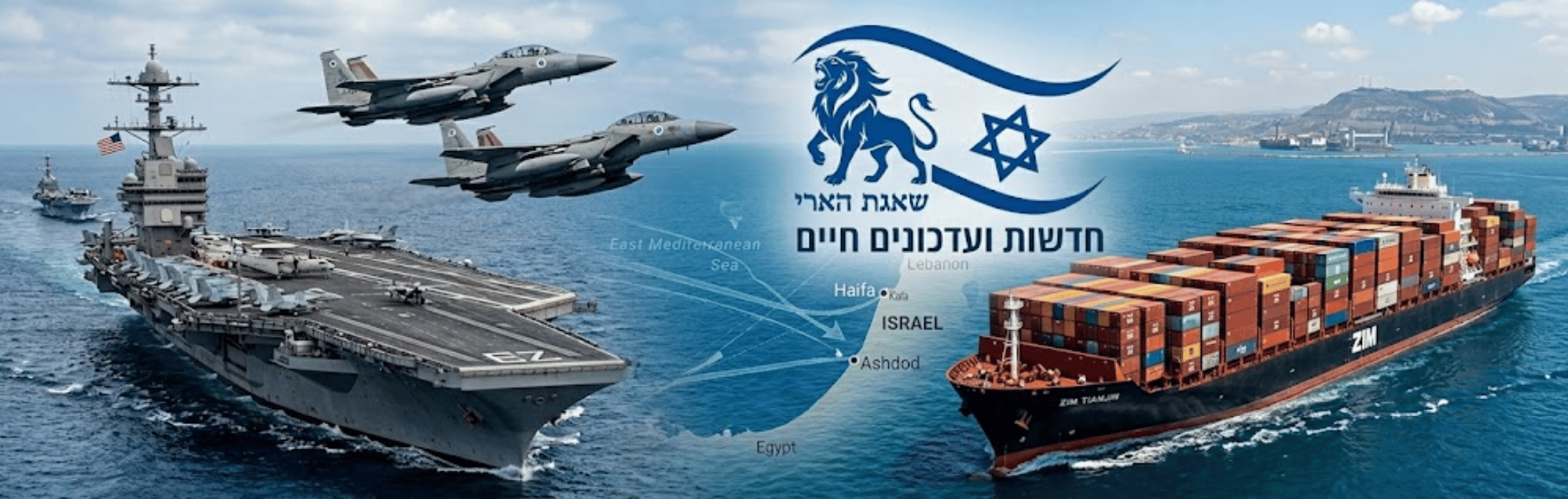
Global Trade Route Shifts Following the Red Sea Blockages

How Israeli Shipping Companies Adapted by Rerouting Through the Cape of Good Hope Introduction Over the...
12 October 2025

Customs Brokerage in Land Crossings – What You Need to Know About Imports via Jordan and Eilat Port

Introduction In global trade, most Israeli importers focus on sea or air freight. However, land-based...
07 September 2025

Common Mistakes in Personal and Commercial Imports – and How a Customs Broker Can Prevent Them

Introduction Importing goods, whether for personal use or large-scale commercial trade, involves complex...
07 September 2025

Fast Customs Clearance – How to Choose a Customs Broker Who Knows How to Shorten Processes

Introduction In today’s fast-paced world of import and export, time is not only money – it is also a...
07 September 2025

Green Shipping – Standards, Methods, and the New Logistics Opportunity

Introduction As environmental concerns increasingly shape government policy, business efficiency, and...
31 August 2025

Continuous Shipping in the New Middle East – Is Israel Becoming a Bridge Between Bahrain, the UAE and the West?

Introduction The Abraham Accords opened new economic routes between Israel and Arab states, particularly...
31 August 2025
מאמרים חדשים
Categories

שדרוג מאמרים:
עדכון, חידוש ושיפור תוכן למאמרים קיימים

Why open markets matter

Why open markets matter

People trade and governments open markets because it is in their interest to do so. Trade and market openness has historically gone hand-in-hand with better economic performance in countries at all levels of development, creating new opportunities for workers, consumers and firms around the globe and helping to lift millions out of poverty. Relatively open economies grow faster than relatively closed ones, and salaries and working conditions are generally better in companies that trade than in those that do not. More prosperity and opportunity around the world also helps promote greater stability and security for everyone.

So does trade really benefit ordinary people?

Trade has contributed to lifting hundreds of millions of people out of poverty: the share of the world’s population living on less than PPP USD 1.90 per day fell from around 35% in 1990 to less than 10% in 2015. Evidence on the impact of trade on poverty in developing countries over 1993-2008 shows that the change in the real income of the bottom 20% of the population is strongly correlated with the change in trade openness over the same period. Developing and emerging economies are playing a more important role today in trade than ever before, contributing to declining inequality among countries (though not always within countries).

Trade has delivered unprecedented access to goods and services, with a revolution in the availability of goods for low income households. Take the cost of purchasing a television set, for example: between 1980 and 2014, the price of a roughly comparable TV set fell by 73%, in part as the result of ambitious trade liberalisation efforts – and the smart television sets we buy today are vastly better than those available in the 1980s. Lower prices are particularly beneficial for poor households, which spend relatively more on heavily-traded products (for example, staples such as food and garments).

Not only does trade lower prices, it also provides jobs for millions of people around the world. In a large country like the United States, around 10% of the workforce is involved in producing goods and services that are exported and consumed abroad, which amounts to around 14 million American jobs. The share goes up to 20% for France, almost 30% for Germany, and 47% for a small open economy like Ireland.

Across all countries, the share of jobs that rely on trade is significantly higher when taking into account “indirect” exports (when a person or company sells a good or service to another actor in the domestic market that uses it as an input in its exports). In some countries like China these can out-number jobs in the exporting industries themselves. These indirect export channels are especially important for smaller firms.

Trade also plays a role in raising incomes and improving overall working conditions. Exporters in the United States, for example, on average pay wages that are 6% higher than non-exporters. And whether the measure is injuries on the job, child labour, informality, or effects on female labour, open economies significantly out-perform closed ones, and labour rights are generally better respected.

More related articles...

Blog
עורך ראשי

About Country Risk Assessment

For each insurance application received in ASHRA, we perform a risk assessment of the non-payment in the associated transaction. This risk assessment is based on

read more »
Blog
עורך ראשי

Challenges and opportunities in trade

Tambien disponible en español | Egalement disponible en français The tensions we are now seeing in the international trading system have been building over decades. Many people

read more »
Blog
עורך ראשי

The Importer’s Practical Guide

The process of importing to Israel includes a series of measures, which you, as an importer, should be familiar with before executing an import transaction.

read more »

אולי יעניין אותך גם...

https://www.unitedxp.co.il/wp-content/uploads/2025/08/יחדיו-עמילות-מכס-1.png
Shipping Forecast 2026: What Trends Will Impact Delivery Times and Import Costs to Israel?

Introduction The global shipping industry is undergoing a dramatic transformation. In 2026, five key trends are expected to reshape how goods arrive in Israel. Geopolitical changes, environmental regulations,...

https://www.unitedxp.co.il/wp-content/uploads/2025/08/יחדיו-3.png
Approaching Regulation – What to Expect from Israel’s New Trade Agreements

In the coming decade, Israel is expected to expand its free trade agreements with key global partners, reduce tariffs on hundreds of product categories, and reshape its import and export landscape. For...

https://www.unitedxp.co.il/wp-content/uploads/2025/08/טעויות-נפוצות-בשינוע-ואחסון-–-ואיך-להימנע-מהן.png
Common Mistakes in Storage and Transportation – and How to Avoid Them

Introduction: Why Proper Storage Isn’t a Luxury, But a Necessity Every business that handles goods – whether an agricultural exporter, a tech importer, or a cosmetics manufacturer – knows that the...

https://www.unitedxp.co.il/wp-content/uploads/2025/08/איך-לבחור-מחסן-לוגיסטי_-כך-תשמור-על-הסחורה-שלך-לאורך-זמן.png
How to Choose a Logistics Warehouse – Keep Your Goods Safe for the Long Haul

Introduction: A Warehouse Is Not Just a Space – It’s a Critical Part of Your Business In today’s business world, a warehouse is not merely a physical space for storing goods. A logistics warehouse...

https://www.unitedxp.co.il/wp-content/uploads/2025/08/שינוע-מטענים-יבשתיים.png
Short-Term vs. Long-Term Storage – What’s the Difference and Why It Matters

Introduction: Choosing the Right Storage Method Is More Than Just Finding Space Whether you’re a first-time importer, warehouse manager, manufacturer, or goods distributor – one of the most critical...

https://www.unitedxp.co.il/wp-content/uploads/2025/07/שינוע-מטענים-בקירור-–-איך-להבטיח-שהסחורה-לא-תתקלקל.png
Refrigerated Freight Transportation – How to Ensure Your Goods Don’t Spoil

Introduction In a world where time is a critical resource and customers demand fast, accurate deliveries, refrigerated freight transportation has become one of the most complex challenges in modern logistics....

https://www.unitedxp.co.il/wp-content/uploads/2025/07/שינוע-מטענים-יבשתיים.png
Land Freight Transportation: Advantages, Challenges, and What You Need to Know

Introduction Land freight transportation is one of the most critical pillars in modern supply chain infrastructure. While sea and air freight connect countries, land transport links endpoints — from ports...

https://www.unitedxp.co.il/wp-content/uploads/2025/07/Yellow-and-White-Modern-Workplace-Safeity-Training-Presentation-10.png
Frequently Asked Questions: Everything You Wanted to Know About Customs Agents

Frequently Asked Questions: Everything You Wanted to Know About Customs Brokers In an era where global supply chains are under pressure — from the “Operation Iron Swords” conflict to the increasing...

https://www.unitedxp.co.il/wp-content/uploads/2025/07/יחדיו-עמילות-מכס-3.png
FCL vs. LCL: Which Shipping Option Is Right for Your Business?

Introduction: A Logistical Decision with Financial Impact For any importer, the choice between FCL (Full Container Load) and LCL (Less than Container Load) is strategic. It influences not only the final...

https://www.unitedxp.co.il/wp-content/uploads/2025/06/יחדיו-עמילות-מכס-2.png
Customs Broker – The Central Player in the Supply Chain: Roles, Responsibilities, and Challenges

Introduction In every import transaction—whether it’s a massive container shipment from the Far East or a personal package from the United States—there is one key player who mediates between the importer...

1 2 3 4 13