

תקציר
Home » Blog » Market analysis tools January 4, 2022 Trade Map A key challenge for exporters is the scarcity of reliable trade information on markets. The International Trade Centre has developed a suite of online tools to make global trade more transparent and facilitate access to new markets: Trade Map, Market Access Map, Investment Map, Export Potential Map, Sustainability Map, Procurement Map and Trade Competitiveness Map.Based on businesses’ responses to ITC’s 2016 annual survey, ITC market intelligence tools helped generate around $300 million in…

A key challenge for exporters is the scarcity of reliable trade information on markets.
The International Trade Centre has developed a suite of online tools to make global trade more transparent and facilitate access to new markets: Trade Map, Market Access Map, Investment Map, Export Potential Map, Sustainability Map, Procurement Map and Trade Competitiveness Map.
Based on businesses’ responses to ITC’s 2016 annual survey, ITC market intelligence tools helped generate around $300 million in trade transactions. They are deemed particularly instrumental to users in least developed countries, where local sources of trade intelligence are often unavailable.
Access to ITC’s Market Analysis Tools is entirely free for users based in developing countries and territories as well as the European Union, thanks to the support from the World Bank, the European Union and contributors to ITC’s trust fund.
For more information, please consult the comprehensive brochure on our services and offers

Trade Map
The Trade Map provides on-line access to one of the world’s largest trade databases and presents indicators on export performance, international demand, alternative markets and the role of competitors from both the product and country perspective. Company contact information is also available for 64 countries.

Market Access Map
The Market Access Map provides information on applied customs tariffs, including Most Favoured Nation (MFN) tariffs and unilateral and trade agreement preferences. The application also covers tariff rate quotas, trade remedies, rules of origin, plus the corresponding certificates, bound tariffs of World Trade Organization (WTO) members, non-tariff measures and trade flows.

Investment Map
The Investment Map combines statistics on foreign direct investment and international trade, tariff data and the activities of multinational firms into an easy-to-use, interactive internet tool that allows analysis by country, trading partner and sector.

Sustainability Map
The Sustainability Map provides online access to a wide-range of information related to sustainability initiatives, standards and trends, allowing businesses to deploy better sustainability practices in international trade.

Export Potential Map
The Export Potential Map translates rigorous trade analysis into practical information about export opportunities for 222 countries and 4,064 products. Based on an economic model that draws on trade, tariff, GDP and geographic data, the tool helps countries spot untapped export potential as well as opportunities for export diversification. The tool facilitates evidence-based prioritization of sectors and markets to inform and develop national and regional export strategies, help guide businesses in their export decisions, as well as strategically direct trade policy negotiations.

Procurement Map
The Procurement Map seeks to help businesses, especially small and medium-sized enterprises, bid for public procurement contracts around the world. It includes a country-by-country breakdown of up to 100,000 public tenders, and indicates when countries have procurement policies that favour women-owned businesses or SMEs.

Global Trade Helpdesk
Global Trade Helpdesk simplifies market research for firms through unified access to crucial trade and business information. It helps firms to identify and compare export opportunities, assess market access conditions, navigate trade procedures, and connect with partners to put their export plans into action.

Trade Competitiveness Map
The Trade Competitiveness Map provides national export performance and national import profiles for around 240 countries and territories. It also offers a Trade Performance Index (TPI) by key export sectors grouped into 14 clusters.

45How to Choose a Freight Forwarder and Customs Broker: 10 Questions You Must Ask
תקציר In Israel, a customs broker represents the importer before customs authorities and handles professional aspects of clearance. Choosing a freight forwarder and customs broker
Macroeconomic Trends Affecting Shipping, Imports & Exports
תקציר This article reviews the main macroeconomic trends affecting the shipping, import, and export industry, with a focus on impacts on customs brokerage, freight forwarding,
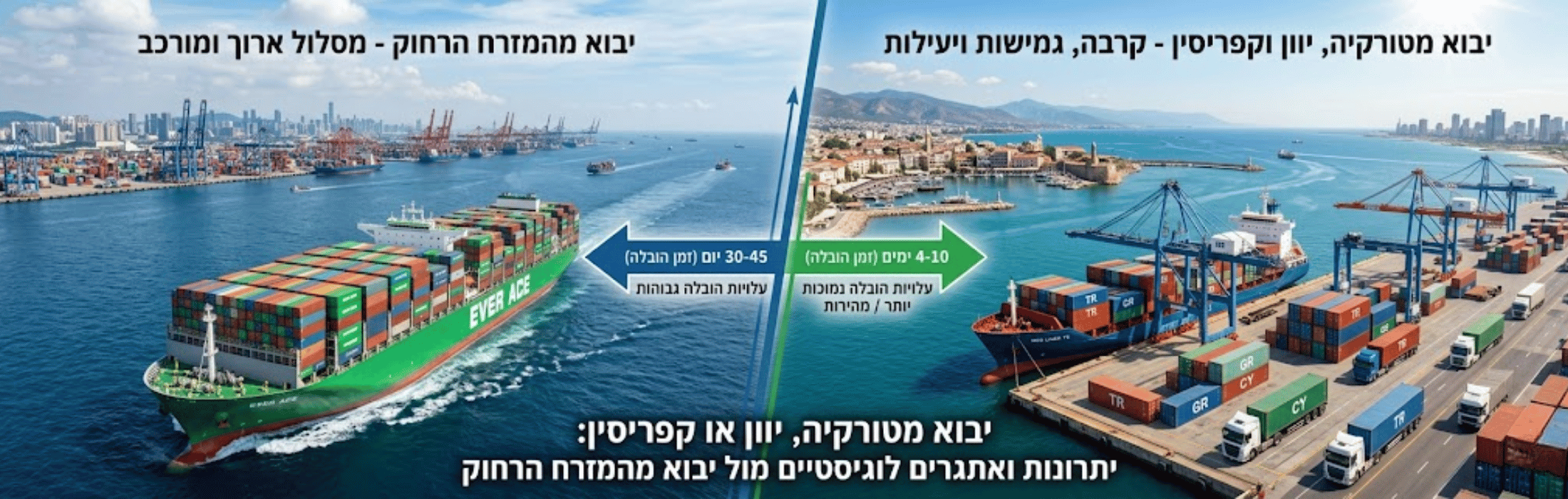
Import from Turkey, Greece or Cyprus: Logistics Advantages and Challenges vs. Import from the Far East
תקציר Import from Turkey, Greece or Cyprus does not fully replace import from the Far East. Import from Turkey, Greece or Cyprus offers significant advantages
Israel’s Digital Customs Reform 2026: World Gate, NII System, and Sensitive Food Import Regulations
תקציר 10 Keywords: Shortened import declaration, Nail system NII, World Gate, Shaar Olami, Israeli customs, sensitive food import, smart card, digital signature, Customs and VAT
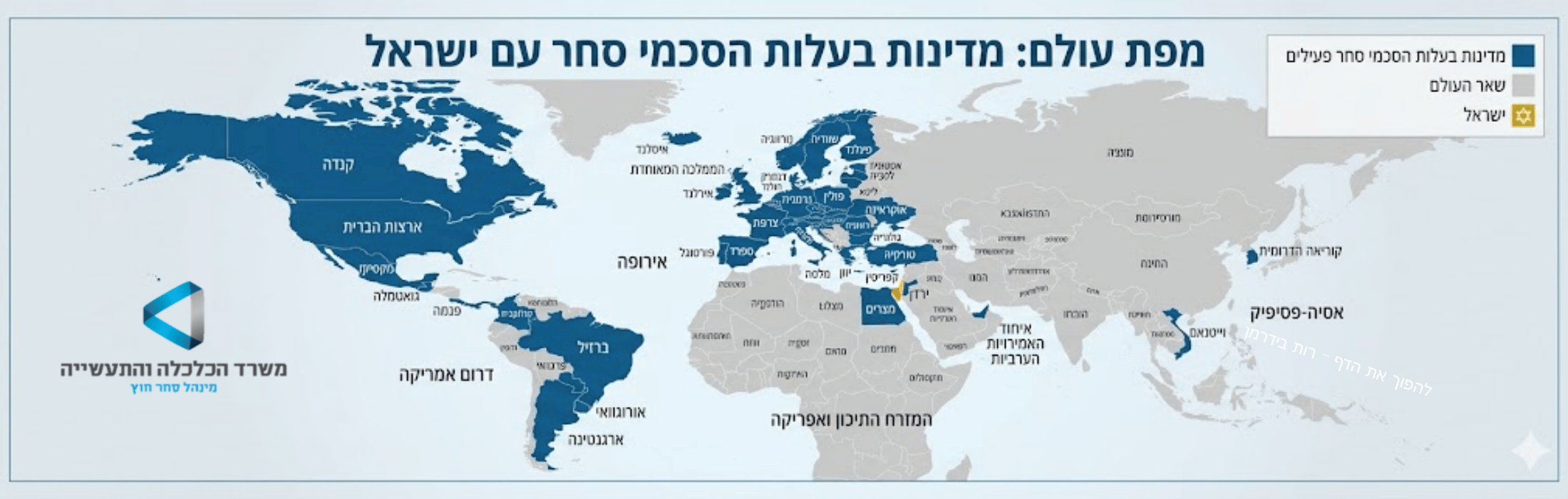
Free Trade Agreements: How UnitedXP Saves Customs Duties Using EFTA, Canada & UK
תקציר Keywords: Israel free trade agreements, EFTA Israel, Canada Israel agreement, UK Israel agreement, rules of origin, certificate of origin, customs duty exemption, customs brokerage,
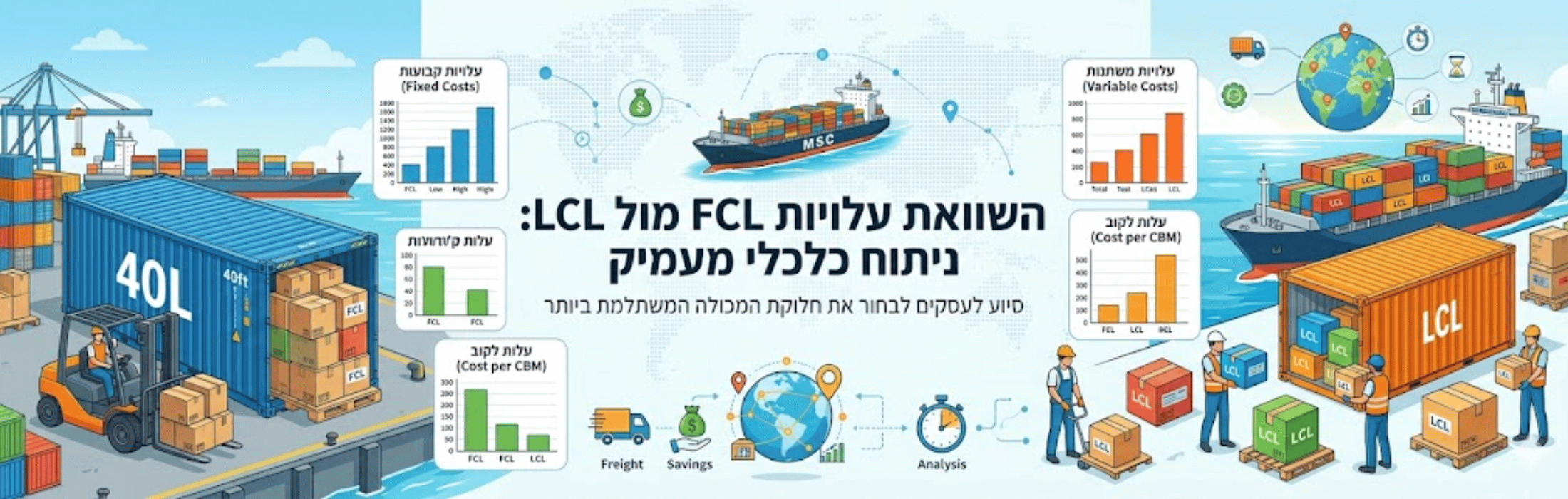
FCL vs LCL Costs: Economic Analysis for Profitable Container Split
תקציר In current 2026 data, a shipment of 8 CBM from Shanghai to Los Angeles costs approximately $960 via LCL, compared to about $3,200 via