חדשות האתר

Israel and India Renew Free Trade Agreement Negotiations

Israel and India Renew Negotiations on Free Trade Agreement Israel and India Renew Negotiations on Free...
23 November 2025

Importing from China to Israel – Essential Guide

The Complete Guide to Importing from China to Israel – Costs, Risks & Practical Tips The Complete...
16 November 2025

Timeline – Global Logistics Trends 2024 - 2026

2026 is shaping up to be a turning point in global shipping: accelerated AI[1] adoption across the supply...
09 November 2025

How AI Transformed Global Shipping in 2025 — And What It Means for Importers in 2026

The year 2025 marked a major turning point in the global shipping industry. Artificial intelligence,...
02 November 2025

Global Trade Route Shifts Following the Red Sea Blockages

How Israeli Shipping Companies Adapted by Rerouting Through the Cape of Good Hope Introduction Over the...
12 October 2025

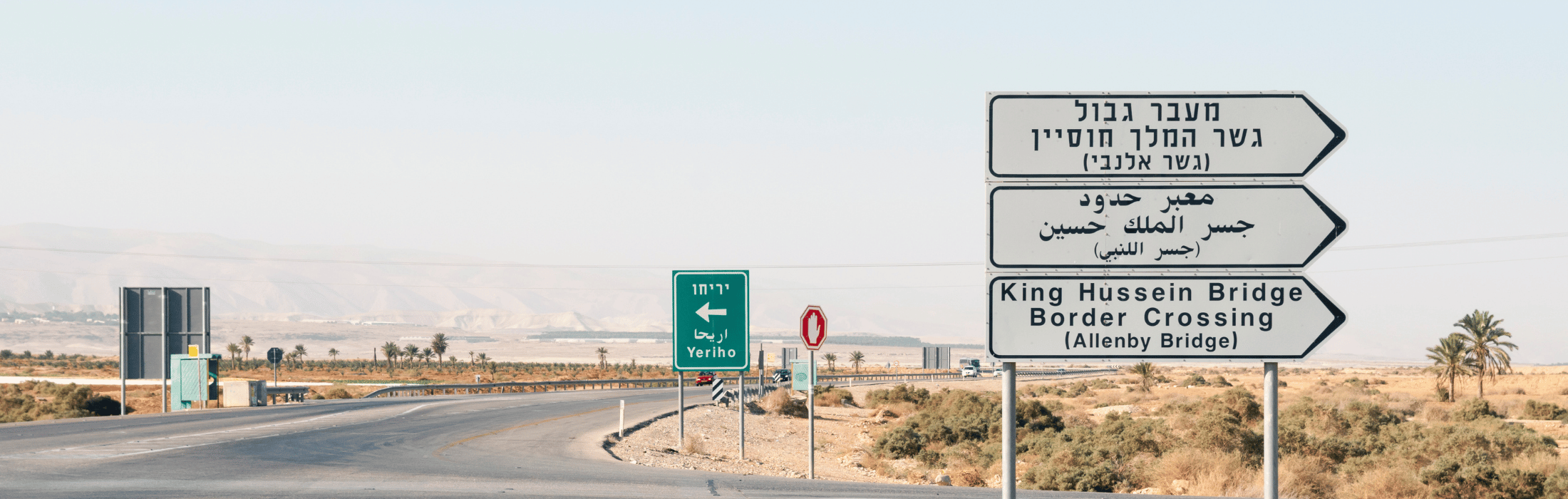
Customs Brokerage in Land Crossings – What You Need to Know About Imports via Jordan and Eilat Port

Introduction In global trade, most Israeli importers focus on sea or air freight. However, land-based...
07 September 2025

Common Mistakes in Personal and Commercial Imports – and How a Customs Broker Can Prevent Them

Introduction Importing goods, whether for personal use or large-scale commercial trade, involves complex...
07 September 2025

Fast Customs Clearance – How to Choose a Customs Broker Who Knows How to Shorten Processes

Introduction In today’s fast-paced world of import and export, time is not only money – it is also a...
07 September 2025

Green Shipping – Standards, Methods, and the New Logistics Opportunity

Introduction As environmental concerns increasingly shape government policy, business efficiency, and...
31 August 2025

Continuous Shipping in the New Middle East – Is Israel Becoming a Bridge Between Bahrain, the UAE and the West?

Introduction The Abraham Accords opened new economic routes between Israel and Arab states, particularly...
31 August 2025
מאמרים חדשים
Categories

שדרוג מאמרים:
עדכון, חידוש ושיפור תוכן למאמרים קיימים

The Drivers of Supply Chain Resilience

The Drivers of Supply Chain Resilience

The pandemic has shown the vitality of supply chain resilience. Dr Yueh explains what trends should be considered going forward in building back supply chains around the world. Banner image: Shutterstock/Travel mania

The shift from ‘Just-in-Time’ to ‘Just-in-Case’ captures the changes in supply chain management and the push for greater resilience that are increasingly characterising this fast-changing area.

The pandemic has highlighted the importance of supply chain resilience, that is, having an alternative to ‘Just-in-Time’ supply chains should there be border closures due to governments managing the pandemic.

The aftermath of the border closures has also contributed to supply chain disruptions as ships are not in the right place, among others.

Though that has increased the need for supply chain resilience, the drivers of changing how supply chains are managed precede the pandemic and include economic shifts, geo-political tensions, technological change, and consumer preferences linked to the environment.

The old economic drivers of ‘Just-in-Time’ supply chains included lower wages in emerging economies, particularly in China. Coupled with lower ICT and transport costs, the ability to fragment the production chain led to a burst of offshoring in the 1990s.

But, when wages started rising in China around the time its working population peaked, that began to change the picture. Coupled with high energy costs that were slowing down delivery times, the 2010s witnessed some US companies move from offshoring to re-shoring. Some US multinationals brought their production and their supply chains home.

The term, ‘Just-in-Case’ supply chains, though, was popularised due to greater geo-political tensions in the past few years. Notably, the Trump administration from 2016 until 2020 was engaged in a series of “trade wars” with China.

The imposition of tariffs and investment restrictions, often with short notice, hampered the usual functioning of supply chains. Since East Asia produces half of the world’s semi-conductor chips and China was an integral part of regional supply chains, the risk of disruption extended beyond American and Chinese borders. Brexit also led to multinational firms putting in place ‘Just-in-Case’ supply chains in the event of a ‘hard Brexit’ where the UK would have left the EU without a trade deal.

Although taking a different form, the risk of trade tools such as tariffs being used as a tool in geo-politics continues. China and Australia’s tensions, and the Japan-South Korea “trade war” are examples.

There is a further issue that has come to the forefront since the pandemic. There is greater concern about relying on another country for essential supplies, such as PPE and medicines. The most recent G7 communique in 2021 stressed the need for supply chain resilience for instance.

The LSE Commission for Economic Diplomacy, which I chaired, called for stress testing key supply chains to ensure that there was diversification and an alternative should a disruption occur. A more transparent and stress tested regime for supply chain resilience would be preferable to the current reality, where companies are not certain as to which supply chains would be under greater scrutiny.

The LSE Commission encouraged countries to identify the key supply chains and outline the testing required for resilience, and co-ordinate it among countries, so that firms would know what they were subject to and can manage accordingly.

But it’s not just risk factors that have been driving a re-think of supply chains. Technology is also a driver.

For instance, the greater commercialisation of additive manufacturing, also known as 3D printing, has the potential to shorten supply chains. Airplanes, for example, have come to use 3D printed parts instead of imported components. It has yet to become widely used.

But when looking at the automobile sector and the number of components that cross the UK-EU and US-Mexican borders, which were both at risk of disruption recently, it may be that such technology will increase the ability of companies to localise some parts of their supply chains.

The final major driver is consumer preferences. Although again not yet widely manifest, there are pockets of people who profess a preference to buy local, including to reduce the carbon footprint of their purchases as well as support local businesses.

Environmental concerns, such as when carbon is emitted through international transport, could also eventually drive the greater localisation of supply chains.

The efficient supply chains wrought by businesses over the past few decades are being subject to a series of forces which will lead to a re-think. For advanced and developing countries alike, recognising these trends and risks will be important in ensuring supply chains that function well during a changed 21st century global economy.

Given the particular importance for developing countries to integrate into global and regional supply chains, which can help their industries upgrade by working closely with existing global value chains, setting out a clear set of rules around supply chain resilience would increase confidence. For instance, which supply chains are vulnerable to geo-economic risks, whereby geo-politics and economics collide? What should companies in these sectors expect in terms of regulation, approvals or standards? Should those key supply chains move to ‘Just-in-Case’ to ensure resilience? How can countries promote efficiency and commercially viable decisions while at the same safeguarding against key supply chain risks?

These are some of the important questions to consider. As mentioned earlier, it would be important to not go it alone. The G7 is advocating a plurilateral approach whereby countries can come together to agree how to manage supply chain resilience. A globally co-ordinated stress testing regime would offer transparency in how supply chain management should change. That would be a step forward in helping companies manage supply chains that suit the 21st century world.

More related articles...

Blog
עורך ראשי

About Country Risk Assessment

For each insurance application received in ASHRA, we perform a risk assessment of the non-payment in the associated transaction. This risk assessment is based on

read more »
Blog
עורך ראשי

Challenges and opportunities in trade

Tambien disponible en español | Egalement disponible en français The tensions we are now seeing in the international trading system have been building over decades. Many people

read more »
Blog
עורך ראשי

The Importer’s Practical Guide

The process of importing to Israel includes a series of measures, which you, as an importer, should be familiar with before executing an import transaction.

read more »

אולי יעניין אותך גם...

https://www.unitedxp.co.il/wp-content/uploads/2025/08/יחדיו-עמילות-מכס-1.png
Shipping Forecast 2026: What Trends Will Impact Delivery Times and Import Costs to Israel?

Introduction The global shipping industry is undergoing a dramatic transformation. In 2026, five key trends are expected to reshape how goods arrive in Israel. Geopolitical changes, environmental regulations,...

https://www.unitedxp.co.il/wp-content/uploads/2025/08/יחדיו-3.png
Approaching Regulation – What to Expect from Israel’s New Trade Agreements

In the coming decade, Israel is expected to expand its free trade agreements with key global partners, reduce tariffs on hundreds of product categories, and reshape its import and export landscape. For...

https://www.unitedxp.co.il/wp-content/uploads/2025/08/טעויות-נפוצות-בשינוע-ואחסון-–-ואיך-להימנע-מהן.png
Common Mistakes in Storage and Transportation – and How to Avoid Them

Introduction: Why Proper Storage Isn’t a Luxury, But a Necessity Every business that handles goods – whether an agricultural exporter, a tech importer, or a cosmetics manufacturer – knows that the...

https://www.unitedxp.co.il/wp-content/uploads/2025/08/איך-לבחור-מחסן-לוגיסטי_-כך-תשמור-על-הסחורה-שלך-לאורך-זמן.png
How to Choose a Logistics Warehouse – Keep Your Goods Safe for the Long Haul

Introduction: A Warehouse Is Not Just a Space – It’s a Critical Part of Your Business In today’s business world, a warehouse is not merely a physical space for storing goods. A logistics warehouse...

https://www.unitedxp.co.il/wp-content/uploads/2025/08/שינוע-מטענים-יבשתיים.png
Short-Term vs. Long-Term Storage – What’s the Difference and Why It Matters

Introduction: Choosing the Right Storage Method Is More Than Just Finding Space Whether you’re a first-time importer, warehouse manager, manufacturer, or goods distributor – one of the most critical...

https://www.unitedxp.co.il/wp-content/uploads/2025/07/שינוע-מטענים-בקירור-–-איך-להבטיח-שהסחורה-לא-תתקלקל.png
Refrigerated Freight Transportation – How to Ensure Your Goods Don’t Spoil

Introduction In a world where time is a critical resource and customers demand fast, accurate deliveries, refrigerated freight transportation has become one of the most complex challenges in modern logistics....

https://www.unitedxp.co.il/wp-content/uploads/2025/07/שינוע-מטענים-יבשתיים.png
Land Freight Transportation: Advantages, Challenges, and What You Need to Know

Introduction Land freight transportation is one of the most critical pillars in modern supply chain infrastructure. While sea and air freight connect countries, land transport links endpoints — from ports...

https://www.unitedxp.co.il/wp-content/uploads/2025/07/Yellow-and-White-Modern-Workplace-Safeity-Training-Presentation-10.png
Frequently Asked Questions: Everything You Wanted to Know About Customs Agents

Frequently Asked Questions: Everything You Wanted to Know About Customs Brokers In an era where global supply chains are under pressure — from the “Operation Iron Swords” conflict to the increasing...

https://www.unitedxp.co.il/wp-content/uploads/2025/07/יחדיו-עמילות-מכס-3.png
FCL vs. LCL: Which Shipping Option Is Right for Your Business?

Introduction: A Logistical Decision with Financial Impact For any importer, the choice between FCL (Full Container Load) and LCL (Less than Container Load) is strategic. It influences not only the final...

https://www.unitedxp.co.il/wp-content/uploads/2025/06/יחדיו-עמילות-מכס-2.png
Customs Broker – The Central Player in the Supply Chain: Roles, Responsibilities, and Challenges

Introduction In every import transaction—whether it’s a massive container shipment from the Far East or a personal package from the United States—there is one key player who mediates between the importer...

1 2 3 4 13