




Israel's Digital Customs Reform 2026: World Gate, NII System, and Sensitive Food Import Regulations
Introduction: The Quiet Revolution of Israeli Customs
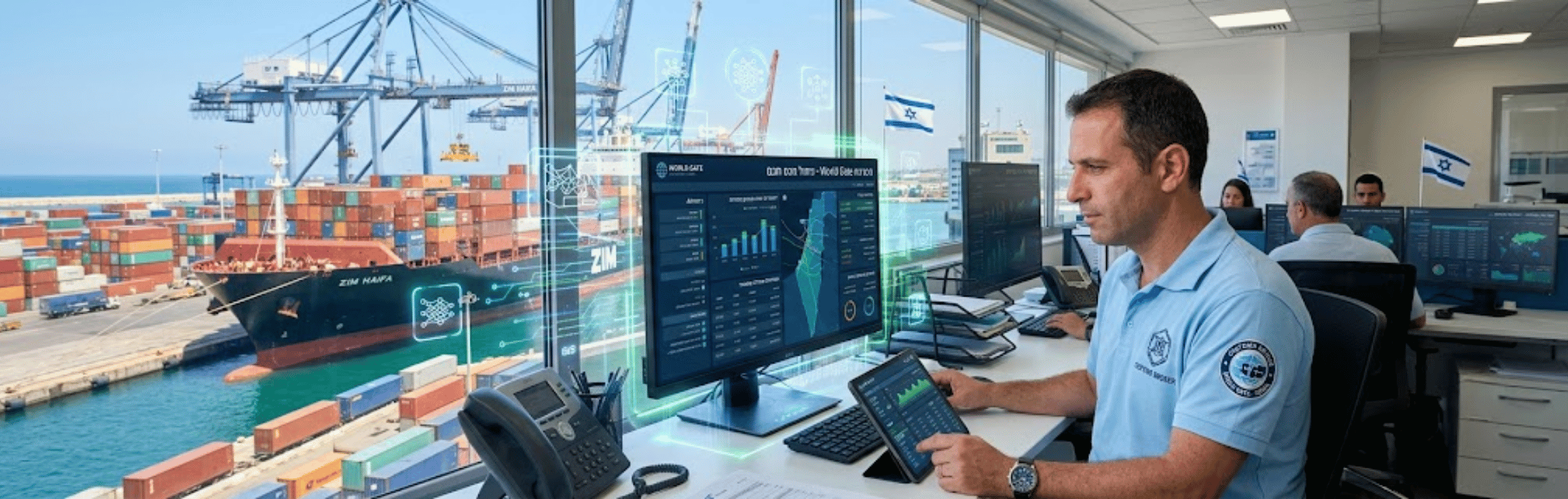
Until about a decade ago, clearing goods through Israeli customs involved many paper forms, physical queues, and correspondence between multiple authorities. In recent years, the Israel Tax Authority – Customs and VAT Directorate has been leading a comprehensive digital reform. Three central pillars stand at the forefront: the 'MAM' system (World Gate), the Non-Intrusive Inspection (NII) "Nail" system, and the renewed regulation of food and sensitive goods imports. This article is based on four official documents published by the Customs Directorate and presents the key guidelines, milestones, and impact on the supply chain.
1. Shortened Import Declaration (Importer's Affidavit) – Official Guidelines
The shortened import declaration, also known as the "Importer's Affidavit", is a foundational document for releasing goods. It is a digital form that serves as official proof for payment of import taxes, completed by the customs broker or the importer directly through the World Gate system [1]. The move to a digital declaration replaced physical forms and enabled faster processing of thousands of transactions daily.
According to the guidelines, the importer must declare the value, classification, and supplier details of the goods. An error in the declaration may delay clearance and lead to fines. The system allows online submission using a smart card and digital signature. Customs Directorate guidelines emphasize that the responsibility for data accuracy lies with the importer [2]. Therefore, it is recommended to use a certified customs broker for proper completion and submission.
2. NII "Nail" System Pilot for Cargo Inspection at Ashdod Port
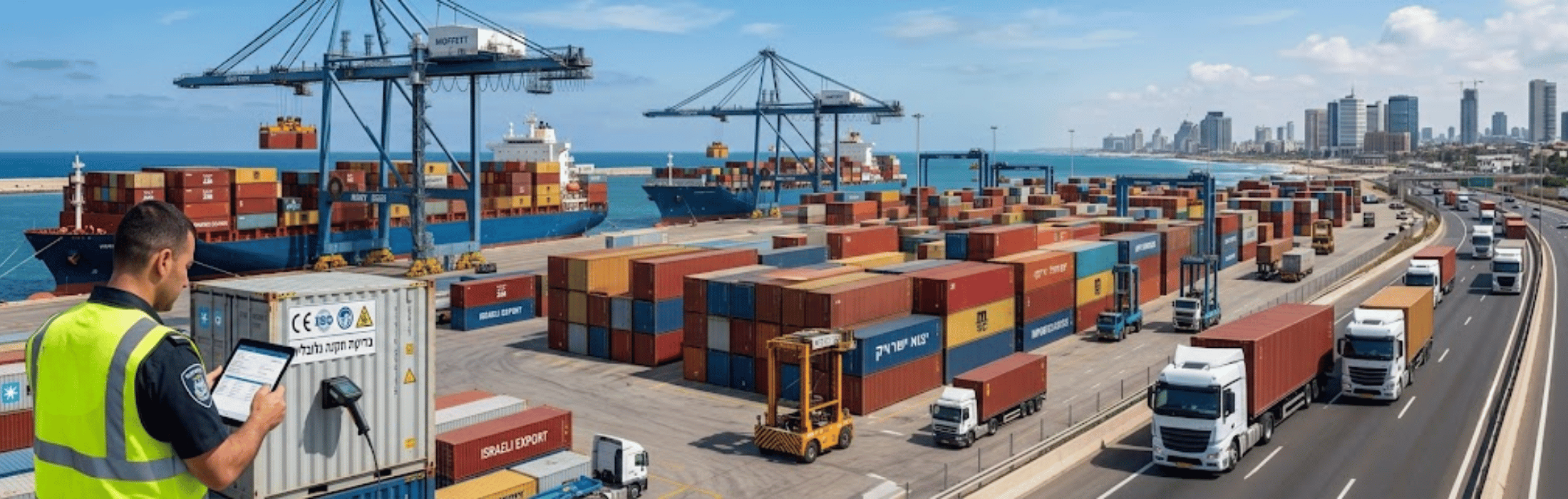
The "Nail" system (Non-Intrusive Inspection – NII) is an advanced scanning technology that allows inspection of containers and their contents without physically opening them [3]. The pilot for this system was conducted at Ashdod Port as part of the port's innovation program, in cooperation with the Tax Authority and Israeli startups. The success of the pilot led to the expansion of NII systems to other ports, including Haifa Port and the Gulf Port.
The operational benefits of the NII system are significant: shorter inspection times, reduced need for physical container opening (thus preventing damage to goods), and improved detection of prohibited or dangerous materials. A Customs Directorate report notes that the system led to a reduction of approximately 35% in the number of containers opened for inspection, while maintaining a high level of security [3].
3. Guide for Implementing the Automated Customs System – 'MAM (World Gate)
The 'MAM system (known as World Gate, Global Gate, or Shaar Olami) is the central cloud platform for managing Israel's foreign trade [4]. The official Customs Directorate guide details the prerequisites: a smart card, digital signature, and online registration. The system connects the Customs Directorate with the Ministries of Health, Agriculture, Economy, and the Standards Institute, enabling a "Single Window" for submitting all required approvals.
The guide describes the workflow: submitting import/export declarations, attaching digitally signed documents, paying fees and taxes, and tracking clearance status. It also addresses the management of digital powers of attorney and the retention of a 7-year archive [5]. The system first entered pilot in 2015 and was officially launched on January 14, 2018. Since then, it has undergone continuous upgrades, including the integration of artificial intelligence for risk management.
Start of the 'MAM project – electronic transfer of cargo manifests.
Mandatory pilot for import declarations. Major importers required to test the World Gate system [6].
Official launch of 'Global Gate' (World Gate). Digital signature and smart card become mandatory [4].
Power of attorney for customs broker and importer declaration become fully digital. Physical documents no longer accepted [7].
Expansion of the system to land border crossings (Allenby, Rafah) and integration with "Nail" scanning systems for container inspection.
Introduction of AI capabilities for risk management, reduction of physical inspections, and expansion of duty exemptions.
4. Regulation of Food and Sensitive Goods Import – Direct Link to the Directorate
The import of food and sensitive goods (such as pharmaceuticals, pesticides, hazardous chemicals, and food supplements) is subject to particularly strict regulation in Israel. The Customs Directorate, in cooperation with the National Food Service at the Ministry of Health, has published detailed guidelines for import regulation [8]. The guidelines distinguish between "regular food" and "sensitive food".
Regular food (Non-Sensitive Food) requires only an online "Importer's Declaration", with no prior approval. In contrast, sensitive food (Sensitive Food) – including animal products, infant formula, flagship products, food supplements, and certain frozen foods – requires obtaining a "Prior Approval for Import of Sensitive Food" before the goods enter Israel [9]. Similarly, sensitive materials like hazardous waste or pesticides require approvals from the Ministries of Agriculture and Environmental Protection.
The official documents detail the list of products requiring prior approval, how to submit the application (through the World Gate system or a dedicated portal), and expected processing times. They also address possible laboratory tests and sampling of goods at the port. It is recommended to prepare in advance and submit all required approvals before the cargo arrives, to avoid delays and unnecessary storage costs [10].
Summary Table: The Four Main Publications of the Customs Directorate
| Official Publication | Main Content | Relevant Documents / Forms |
|---|---|---|
| Shortened Import Declaration (Importer's Affidavit) | Digital declaration of goods value, classification, and supplier. Importer's responsibility for data accuracy. | Importer declaration form, digital power of attorney, smart card |
| NII "Nail" System Pilot | Advanced container scanning at Ashdod Port, reduction of physical openings. | Inspection protocols, scan certificates, compliance reports |
| Guide for Implementing 'MAM (World Gate) | Detailed explanation of registration, smart card, digital signature, management of powers of attorney, and digital archive. | Smart card installation guide, registration forms, API documentation |
| Regulation of Food and Sensitive Goods Import | Distinction between regular and sensitive food, requirement for prior approval and inspection fees. | Prior approval application, manufacturer's declaration, lab results |
Bibliography – Official Sources of Israel Tax Authority and Customs Directorate
Glossary (English – Hebrew)
Frequently Asked Questions: Customs Reform, World Gate, NII System & Sensitive Food Import
Everything about shortened import declaration, smart card, digital signature, cargo inspections – based on official publications of the Customs and VAT Directorate
Shortened import declaration (Importer's Affidavit) is a digital official document submitted through the World Gate system, serving as proof for payment of import taxes. It includes goods details, value, and supplier. Its use is mandatory for every importer clearing goods through Israeli customs. The customs broker fills it based on documents provided by the importer. An error in the declaration may delay clearance [1].
NII "Nail" system (Non-Intrusive Inspection) is an advanced scanning technology for inspecting containers without opening them physically. The pilot was conducted at Ashdod Port. Benefits: shorter inspection times, reduced physical openings, prevention of cargo damage, and improved detection of dangerous materials. Following success, the system was expanded to other ports [3].
'MAM system (World Gate or Shaar Olami) is a cloud platform for managing Israel's foreign trade. It connects the Customs Directorate, Health, Agriculture, and Standards Institute ("Single Window"). The pilot began in 2015, and the official launch was on January 14, 2018. Since then, all import and export declarations are submitted through it using a smart card and digital signature [4].
Smart Card is a security device used for identification and digital signature with the customs system. Without it, you cannot submit declarations, sign a power of attorney for a customs broker, or approve digital documents. The card is issued by authorized companies (e.g., Comsign) and requires installation of dedicated software [5].
Sensitive food includes animal products, infant formula, flagship products, food supplements, certain frozen foods, and more. An importer must obtain Prior Approval for Import of Sensitive Food from the Ministry of Health before the cargo enters Israel. The full list appears in Procedure 05-008 of the Customs Directorate [8][9].
Regular food requires only an online "Importer's Declaration". In contrast, sensitive food requires, in addition to the declaration, prior approval from the Ministry of Health before sailing. Without prior approval, the cargo may be delayed or not cleared at all. This distinction is also important for determining inspection fees [9].
Digital signature is a secure electronic signature with legal validity equivalent to a handwritten signature, under the Electronic Signature Law, 2001. It is performed using a smart card and is required on every document submitted to the World Gate system: invoices, certificates of origin, powers of attorney, declarations, etc. [5].
The NII "Nail" system pilot was conducted at Ashdod Port as part of an innovation program in cooperation with Israeli startups. Results showed a reduction of approximately 35% in the number of containers opened for inspection, while maintaining a high level of security. Following success, the system was expanded to Haifa Port and the Gulf Port [3].
Under the Customs Ordinance, an importer must retain all documents used for clearance (invoices, certificates of origin, health approvals) in a readable digital archive for 7 years. It is recommended to use a secure drive or cloud storage with backup. The World Gate system itself does not constitute a mandatory archive. Documents must be presented for audit within 30 days of a request [4].
The importer bears full responsibility for data accuracy in the import declaration, digital signature on all documents, and retention of the archive for 7 years. An error or omission may lead to fines, clearance delays, and even criminal investigation. It is recommended to use a certified customs broker to reduce risks [2][10].