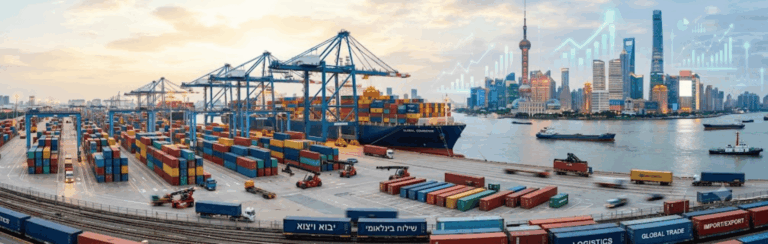

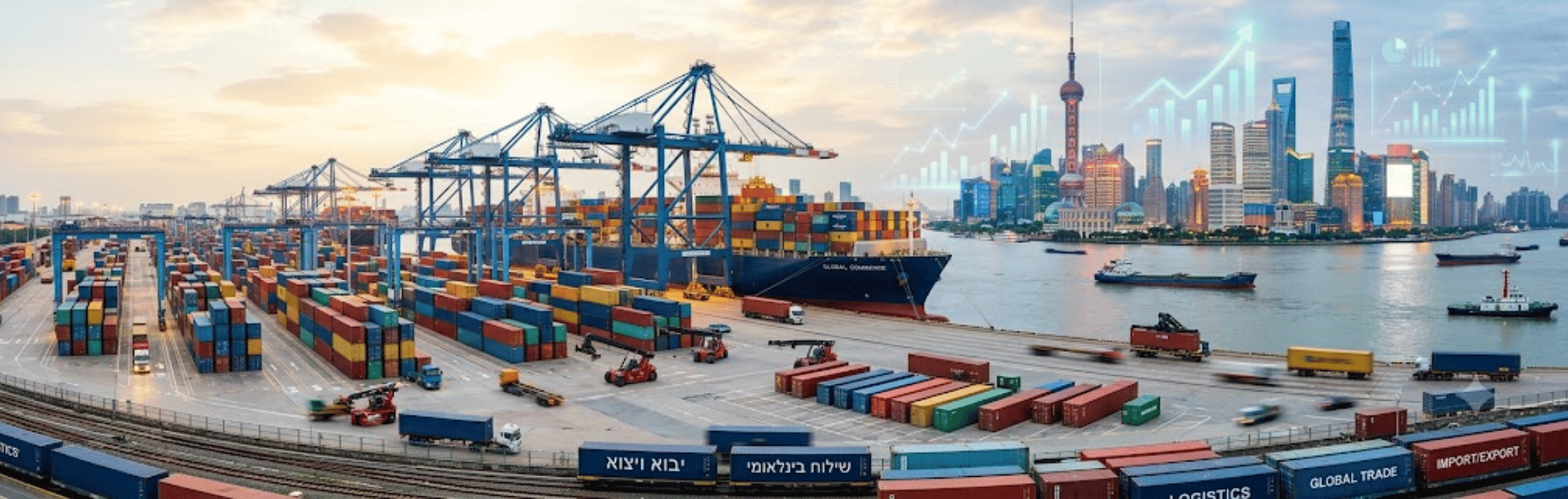


How AI Transformed Global Shipping in 2025 — And What It Means for Importers in 2026

New articles
archives
April 2026
S M T W T F S
 1234
567891011
12131415161718
19202122232425
2627282930  

How AI Transformed Global Shipping in 2025 — And What It Means for Importers in 2026

The year 2025 marked a major turning point in the global shipping industry. Artificial intelligence, already reshaping marketing, finance, and HR, became a core operational engine for importers and logistics providers. What was once a slow, manual process dependent on emails, spreadsheets, and phone calls evolved into an intelligent network capable of identifying bottlenecks, predicting delays, pricing routes, processing documents, monitoring suppliers, and improving customs clearance accuracy.

Amid port congestion, rising fuel costs, geopolitical instability, and growing expectations for transparency, AI allowed importers to operate faster, more accurately, and with increased control. Businesses that adopted real-time data systems gained a competitive edge, while those that continued managing supply chains manually found themselves behind.

This article outlines what changed in 2025 and how importers can leverage these developments entering 2026.

What Changed in 2025

The shift centered around four pillars: data intelligence, prediction, automation, and real-time decision-making.

Automated Documentation

AI systems analyzed shipping documents such as Bills of Lading, Packing Lists, Commercial Invoices, and Certificates of Origin. OCR and validation models identified errors in HS classification, invoice accuracy, and customs fields before arrival, preventing penalties and delays.

Predictive Port and Route Forecasting

Algorithms processed global maritime data, port congestion patterns, weather conditions, labor strikes, and geopolitical risks. Importers received early warnings and alternative routing recommendations.

Smart Freight Pricing

AI compared freight quotations in real time, forecasted rate changes, analyzed market capacity, and evaluated fuel and storage costs. The result was more accurate pricing and improved negotiation.

Inventory and Supply Planning

Predictive models aligned supply chain cycles to customer demand, seasonality, and risk. Importers reduced lead times and avoided overstock. Ecommerce businesses improved customer experience with accurate delivery expectations.

Supplier Monitoring and Risk Control

AI ranked suppliers, detected suspicious activity, analyzed performance, and flagged fraud. Monitoring supplier KPIs became a standard requirement.

Table: AI Impact Across the Supply Chain

AreaBefore AIAfter AI
DocumentationManual checks, frequent errorsAutomated validation, fewer fines and delays
Delivery TimesApproximate ETAHigh-accuracy predictive ETA
Freight PricingManual comparisonDynamic pricing and optimal route selection
Supplier OversightBased only on experienceData-driven supplier scoring and risk alerts
Customer ServiceLimited visibilityReal-time shipment status and automated communication

Real-World Examples

A consumer electronics importer reduced storage fees after AI flagged incorrect customs values
A distribution company shortened clearance time by 18% using OCR and early documentation checks
A fashion retailer rerouted cargo to an alternate port after AI predicted congestion, saving six days

Preparing for 2026

Implement AI-based logistics systems

Adopt OCR, ETA prediction, freight comparison, and customs validation tools.

Elevate customer experience

Provide tracking, notifications, and delivery transparency as a standard expectation.

Work with technology-enabled customs brokers

Integrate systems and move away from scattered files and manual workflows.

Plan multi-route shipping strategies

Use AI to compare cost, time, and risk across global corridors.

Conclusion

The logistics revolution of 2025 demonstrated that AI is not a “nice-to-have” tool but an operational necessity. Businesses that embraced AI gained speed, accuracy, and cost advantages. Those that did not adopt automation will face widening performance gaps in 2026.

Artificial intelligence transformed global trade. The next phase will reward organizations that combine data-driven decision-making with professional human expertise — especially in complex markets like international shipping.

How did AI improve delay predictions in global shipping?
AI analyzed ocean traffic, port congestion, weather patterns, and labor events to provide accurate ETA forecasts and alert importers to disruptions early.
How does AI impact freight pricing?
AI compares rates in real time, tracks market capacity, fuel indexes, and seasonal trends, enabling accurate pricing and better negotiation.
Can AI process and verify import documents?
Yes. AI with OCR validates Bills of Lading, invoices, and certificates of origin, reducing human error and preventing clearance delays and fines.
Does AI replace freight forwarders or customs brokers?
No. AI augments experts by automating checks and improving accuracy. Strategic judgment, compliance management, and regulatory handling still require human expertise.
Is AI accessible to small importers?
Yes. Cloud-based SaaS platforms make advanced automation affordable and easy to deploy without major IT infrastructure.
How does AI enhance supplier management?
AI scores suppliers, detects inconsistent behavior, reviews performance trends, and highlights fraud risks, improving sourcing decisions.
How does AI improve customer experience in logistics?
AI provides real-time shipment visibility, proactive updates, and automated service workflows, leading to higher transparency and fewer support requests.
What does this shift mean for importers in 2026?
Importers must adopt digital systems, automated workflows, and predictive planning tools to remain competitive as logistics becomes fully data-driven.
What competitive advantage does AI give importers?
AI reduces cost, speeds clearance, improves accuracy, and helps businesses navigate market volatility and global supply chain risks.
Can AI reduce customs value and compliance errors?
Yes. AI cross-checks invoices and shipping data to ensure correct valuation and documentation, helping prevent penalties and disputes.

More on the subject...

https://www.unitedxp.co.il/wp-content/uploads/2026/04/השוואת-עלויות-FCL-מול-LCL-ניתוח-כלכלי-מעמיק-שיסייע-לעסקים-לבחור-את-חלוקת-המכולה-המשתלמת-ביותר.png
FCL vs LCL Costs: Economic Analysis for Profitable Container Split

Introduction Ocean freight is the backbone of global trade, with over 80% of world trade volume carried by sea. For importers, exporters, and small to medium‑sized businesses, the decision between FCL...

https://www.unitedxp.co.il/wp-content/uploads/2026/03/איראן-מאותתת-על-סגירה-לצמיתות-של-מצר-הורמו.png
Iran and the Strait of Hormuz: Between Geopolitical Threat and Global Economic Reality

As of late March 2026, the Strait of Hormuz – the world’s most critical maritime chokepoint – has become a central arena in the ongoing war between Iran, the United States, and Israel. Iran has not declared...

https://www.unitedxp.co.il/wp-content/uploads/2026/03/המדריך-המלא-לניהול-מלאי-יעיל-ולשרשרת-אספקה-מתקדמת.jpg
Professional Warehousing & Packaging for Efficient Supply Chains

Professional Warehousing and Packaging Services: The Complete Guide to Efficient Inventory Management and Advanced Supply Chain Introduction: The Strategic Role of Warehousing and Packaging in the Modern...

https://www.unitedxp.co.il/wp-content/uploads/2026/03/עמילות-מכס.jpg
Customs Brokerage 2026: Regulatory, Technological, and Strategic Acceleration – The Complete Guide to Recent Changes

ustoms Brokerage 2026: Regulatory, Technological, and Strategic Acceleration – The Complete Guide to Recent Changes Introduction: The New Era of Customs Brokerage The field of customs brokerage, once perceived...

https://www.unitedxp.co.il/wp-content/uploads/2026/03/מבצע-שאגת-הארי-עדכונים-1.png
Operation “Roaring Lion” – Updates

The Resilience of the Maritime Economy Under Real-World Stress Operation “Roaring Lion,” now entering its third day, constitutes a significant stress test for the Israeli economy in general and for the...

https://www.unitedxp.co.il/wp-content/uploads/2026/01/שילוח-אווירי-מול-שילוח-ימי-–-איך-בוחרים-נכון-ב-2026.png
Air Freight vs. Sea Freight – How to Choose the Right Option in 2026?

Introduction In 2026, choosing between air freight and sea freight is no longer a simple pricing decision. It is a strategic choice that directly affects cash flow, customer commitments, regulatory...

https://www.unitedxp.co.il/wp-content/uploads/2025/12/איך-עמיל-מכס-טוב-יכול-לחסוך-לעסק-כסף-וזמן.png
How a Skilled Customs Broker Can Save Your Business Time and Money

Introduction Import and export activities are a major growth engine for many businesses, but they are also among the most complex and risk-sensitive operational areas. Minor documentation errors, incorrect...

https://www.unitedxp.co.il/wp-content/uploads/2025/12/שאלות-נפוצות-על-שילוח-בינלאומי-ועמילות-מכס-–-תשובות-מקצועיות-מהשטח.png
Frequently Asked Questions About International Shipping and Customs Brokerage

Introduction International shipping and customs brokerage are often perceived as technical and complex fields. In practice, they directly affect costs, delivery timelines, cash flow, and business planning....

https://www.unitedxp.co.il/wp-content/uploads/2025/12/10-שאלות-שכדאי-לשאול-את-חברת-השילוח-לפני-שבוחרים.png
10 Questions You Should Ask a Shipping Company Before Choosing One

Introduction Choosing an international shipping company is a critical business decision, even though it is sometimes treated as a purely operational matter. In practice, a shipping company has a direct...

https://www.unitedxp.co.il/wp-content/uploads/2025/11/0e6be1932431dcde3997db1f4322d9c4.webp
Israel and India Renew Free Trade Agreement Negotiations

Israel and India Renew Negotiations on Free Trade Agreement Israel and India Renew Negotiations on Free Trade Agreement During the visit of India’s Minister of Commerce and Industry, Piyush...

1 2 3 14