



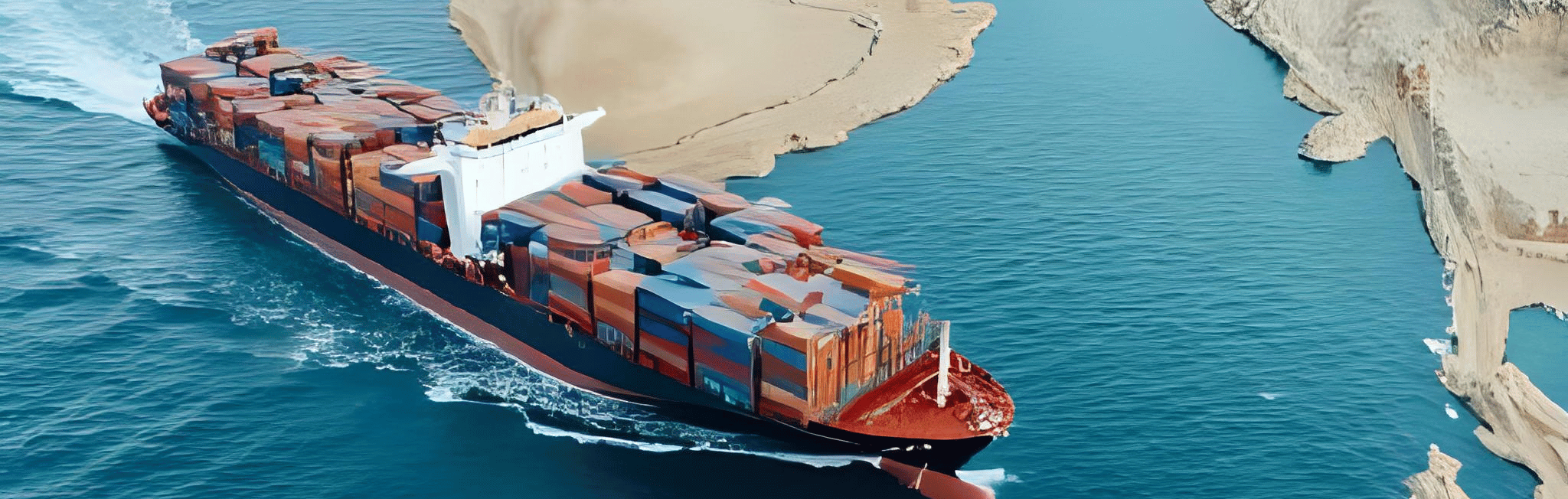
How Israeli Shipping Companies Adapted by Rerouting Through the Cape of Good Hope
Introduction
Over the past few years, global trade routes have undergone one of the most dramatic transformations in modern history. Geopolitical instability, attacks on merchant vessels, and heightened security risks in the Red Sea have disrupted one of the world’s most vital shipping corridors — the Suez Canal route connecting Asia, Europe, and the Middle East.
Since late 2023, hundreds of vessels have chosen to bypass the Red Sea altogether, sailing instead around the Cape of Good Hope in southern Africa. This change has extended voyage times by an average of 10 to 14 days and increased global freight rates by 40–60%. For Israeli shipping and freight forwarding companies, the implications are immediate and profound: longer lead times, higher operating costs, and the need to rethink logistics strategies.
This article analyzes the global impact of these disruptions, the responses of Israeli logistics providers, and the new technologies that are reshaping the industry’s resilience.
Global Overview
The blockage of the Red Sea is not an isolated regional issue — it affects every major trade lane connecting Asia to Europe. According to the Drewry Shipping Index, container traffic along this corridor dropped by over 25% during 2024. The sudden rerouting created congestion in South African ports, increased fuel consumption, and placed additional strain on global supply chains already recovering from the COVID-19 pandemic.
Moreover, the longer Cape route has environmental consequences. Ships now burn significantly more fuel, emitting higher levels of CO₂. This has reignited discussions about green logistics and the European Union’s Emissions Trading System (EU ETS) obligations for maritime operators.
The Impact on Israel
Israel’s economy depends heavily on maritime imports. Data from Port2Port Israel shows that freight rates from East Asia to Israel surged by over 70% following the shift to the Cape route. Local carriers such as Yachdav International Shipping & Customs Brokerage Ltd. had to adapt quickly — renegotiating contracts, updating expected delivery times, and rebalancing warehouse inventories.
Small importers were hit hardest, especially those relying on LCL (Less than Container Load) services, since fixed costs are spread over smaller cargo volumes. Conversely, larger importers using FCL (Full Container Load) shipments maintained more stability due to long-term rate agreements.
Table: Comparing Routes – Suez Canal vs. Cape of Good Hope
| Parameter | Suez Canal Route | Cape of Good Hope Route |
|---|---|---|
| Average transit time (Shanghai–Ashdod) | 18–20 days | 30–34 days |
| Average freight rate per container | $4,000–$5,000 | $6,000–$7,500 |
| Fuel consumption | Lower | About 35% higher |
| Security exposure | High | Lower |
| Environmental impact | Moderate | High (CO₂ emissions) |
| Port infrastructure | Established | Limited in South Africa |
| Schedule reliability | Medium | High |
How Israeli Shipping Companies Adapted
Israeli logistics companies have proven to be among the most agile in the world. Facing rapidly changing conditions, they implemented a combination of technological, contractual, and operational adjustments.
Yachdav International Shipping, for example, adopted the following strategic measures:
Dynamic route optimization – real-time data analytics to identify safer and faster alternatives based on maritime intelligence and weather forecasts.
Partnerships with African terminals – securing capacity and service continuity through South African ports.
Enhanced LCL consolidation management – balancing cost efficiency across multiple clients sharing a single container.
Expanded marine insurance coverage – including clauses for delay and rerouting risks.
Transparent customer communication – live shipment tracking and proactive ETA updates via digital platforms.
This adaptive logistics approach has allowed Israeli firms to maintain service continuity while mitigating the financial impact of the rerouting.
Effects on Supply Chains and Delivery Times
Rerouting via the Cape of Good Hope extended shipping durations by approximately 40%. For time-sensitive industries — such as fashion, electronics, and food — the consequences were immediate. Retailers that previously relied on just-in-time models were forced to stock goods months in advance.
The longer transit times also disrupted supply-demand synchronization, causing inventory build-ups in Asia and shortages in Europe and Israel. Meanwhile, average freight rates rose sharply. Drewry data indicates that between 2023 and 2025, total freight costs to Israel increased by roughly $2,500 per container.
Technological Innovation and Future Solutions
The crisis accelerated digital transformation across the logistics sector. Israeli and global companies increasingly rely on:
AI-driven delay prediction and machine learning models for risk assessment
IoT-based container tracking for temperature, humidity, and GPS monitoring
Fuel optimization systems that reduce energy consumption on longer voyages
Smart contract logistics, allowing dynamic pricing based on real-time route data
Furthermore, Israel’s integration with global e-BL (electronic bill of lading) networks and customs automation tools has shortened clearance times and improved transparency across the entire shipping chain.
Strategic Implications for Global Trade
The Red Sea crisis has redefined global trade geography. The Cape of Good Hope, once considered a secondary route, has regained strategic importance. African nations are investing heavily in port infrastructure, bunkering facilities, and digital logistics corridors.
For shipping lines and freight forwarders, diversification is no longer optional — it’s essential. Companies now seek multi-route strategies, combining sea, air, and even land corridors through Jordan and Egypt when feasible.
Insurance firms have also adjusted policies, differentiating between “war-risk zones” and “extended-route premiums.” This dynamic is pushing the industry toward a more flexible risk-management ecosystem.
Environmental and Economic Balance
Longer voyages mean higher emissions, challenging sustainability goals. However, innovation offers hope. New dual-fuel vessels, hybrid engines, and bio-fuel adoption are helping offset carbon footprints.
At the same time, the crisis revealed the fragility of global logistics and reinforced the need for regional manufacturing and nearshoring strategies. Some Israeli importers have already shifted part of their supply chain to Turkey, Greece, and Eastern Europe to shorten transit times.
Lessons Learned
The Red Sea disruptions have underscored a key truth: supply chain resilience depends on flexibility. Israeli companies like Yachdav demonstrated that proactive planning, transparent communication, and smart technology can turn a global challenge into a competitive advantage.
In the long run, maritime trade will continue to evolve. The winners will be those who embrace data-driven logistics, environmental responsibility, and cross-border collaboration.