




The global trade market significantly relies on containers—giant metal boxes that allow for the safe and efficient transport of cargo worldwide. When discussing the export of goods in large volumes, container export is often the preferred method. Thanks to their capacity to hold a large number of items and protect them from environmental and weather conditions, containers are a core element in every global supply chain.
In this brief article, we’ll survey key information for anyone planning to export goods in containers: from the types of containers suitable for each cargo, through the shipping and classification process, to various guidelines on regulations, insurance, and associated costs.
What Are the Common Types of Containers?
Dry Container (Standard): The most common type, suitable for a variety of dry goods that do not require temperature control. Primarily available in two sizes: 20FT and 40FT.
Reefer Container (Refrigerated): Equipped with an internal cooling system, intended for transporting food products, pharmaceuticals, and items sensitive to temperature.
Open Top Container: Has an open roof that allows loading of tall or unusually high cargo.
Flat Rack Container: Has low or collapsible side walls, suitable for cargo that’s oversized in width or very heavy (e.g., heavy vehicles, machinery).
Tank Container: Used for transporting liquids or chemical substances.
What Should You Know About Container Packing and Preparation?
Internal Packing: Ensure the goods are packed so they won’t move during transit. Consider using partitions, sturdy cartons, plastic wrap, and so on.
Even Weight Distribution: Distribute the weight evenly to prevent tipping or damage to the container walls.
Clear Labeling: It’s important to label boxes and cartons appropriately, including “Fragile,” product codes, and more.
Moisture Resistance: If shipping moisture-sensitive products, consider using moisture absorbers or even choosing a Reefer container (if appropriate).
Container Inspection Before Loading
It’s highly recommended to perform a visual inspection of the container:
External Condition: Check for holes, dents, or severe rust.
Floor: Especially in older containers, ensure there are no cracks or loose floorboards.
Doors and Sealed Closure: Make sure the doors lock properly and the rubber seal is intact.
Internal Cleanliness: A dirty container can damage goods or introduce pests.
The Shipping Process – From Loading the Container to Arrival at the Destination
Ordering a Container and Forwarder: Contact a shipping or international freight forwarder, clarify sailing schedules and costs.
Export Paperwork: Obtain documents such as an export declaration, commercial invoice, and packing list. If regulatory approvals are required, handle them in advance.
Transport to Port: The container is loaded onto a truck and driven to the export port.
Loading onto the Ship: At the port, the container undergoes customs inspection (if needed), is loaded onto the ship, and secured accordingly.
Sea Voyage: The journey time varies depending on distance and shipping route.
Destination Port: The container is unloaded from the ship, and customs clearance is completed in the importing country.
Customs and Standards – What to Expect?
Customs Regulations: Each country has its own laws. When you export, you must declare the container’s contents, the value of the goods, country of origin, etc.
Licenses and Standards: Certain products (food, medical equipment, chemicals) must meet specific standards. Make sure you comply with the requirements of the destination country.
Certificate of Origin: If there’s a trade agreement between Israel and the destination country, consider obtaining a certificate of origin to take advantage of customs benefits.
Insurance – Protecting Yourself From Financial Disaster
The contents of a container may be worth hundreds of thousands or millions of shekels. In case of sinking at sea, water damage, or theft, cargo insurance (Marine Cargo Insurance) can be a lifesaver:
Coverage for Physical Damage: Breakage, moisture, accidents.
Container Coverage: Sometimes insurance for the container itself is necessary (especially if it belongs to an external company).
Exclusions: Check what the policy does not cover (e.g., poor packing).
Common Costs to Consider
Ocean Freight Fees: Payment to the shipping line.
Handling Charges: Port fees, loading, unloading.
Bill of Lading: The shipping document used for ocean freight.
Customs Brokerage: Payment to the customs broker.
Taxes and Fees: If applicable to the export or in the importing country.
Inland Transport: The cost of a truck transporting the container to a warehouse or the port.
Table: Preparation Steps for Container Export
| Step | Practical Action | Outcome/Goal |
|---|---|---|
| Choose Container Type | Match the container type to your cargo (Dry, Reefer, etc.) | Ensure cargo is kept in proper conditions |
| Packing & Arranging | Even weight distribution, correct packing, labeling | Minimize damage, organized unloading at destination |
| Container Inspection | Confirm physical integrity, cleanliness, secure doors | Avoid problems en route |
| Prepare Export Docs | Export declaration, commercial invoice, certificate of origin, packing list | Meet customs & regulatory requirements |
| Transport to Port | Order a truck, coordinate scheduling | Arrive on time for departure |
| Loading onto Ship | Coordinate with the shipping line and broker | Safely stow the container |
| Voyage Monitoring | Receive updates on shipment location | Detect delays or issues in real time |
| Arrival at Destination Port | Customs procedures in the importing country, payment of taxes | Container cleared for release |
Are There Alternatives to Ocean Freight?
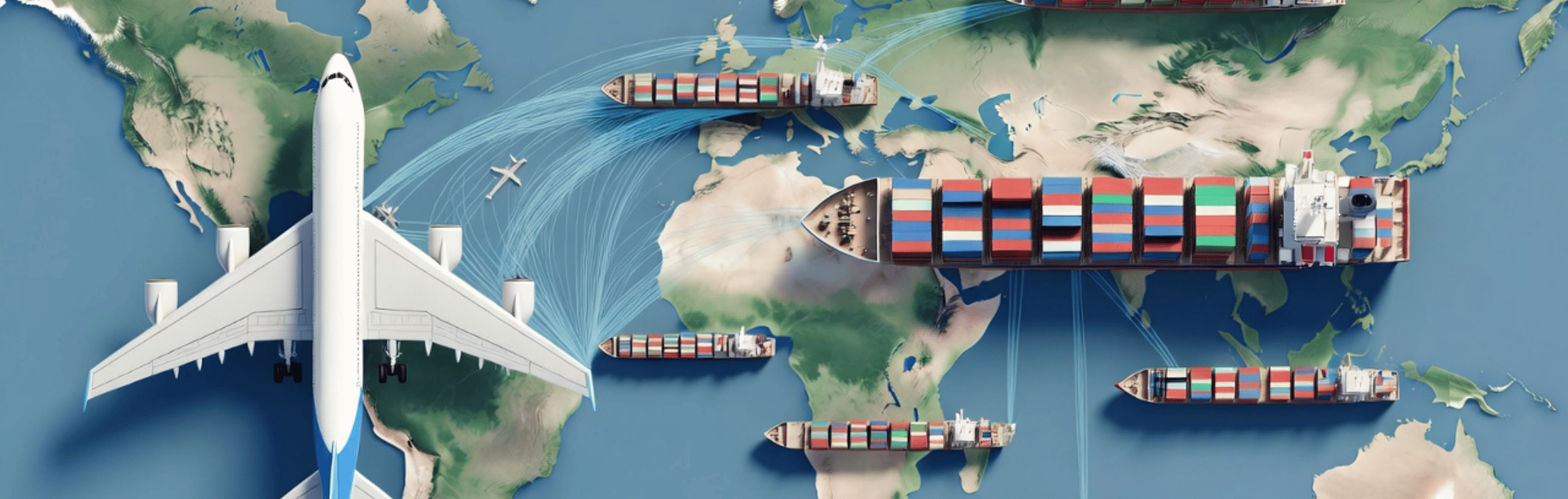
Large-scale exports can of course be done via air freight, but that’s usually far more expensive. For high-end, time-sensitive products (for example, expensive electronics or medications), you may prefer air shipment. Additionally, land shipping to neighboring countries is also possible, depending on infrastructure and geopolitical relations.
Conclusion
Container export is a central and leading method for transporting large volumes of cargo worldwide. It’s a relatively cost-effective solution, but requires careful attention to proper packing, thorough preparation for customs and standards, and selection of the right container type for the goods you’re exporting. With meticulous planning, proper insurance, and collaboration with a professional freight forwarder and customs broker, you can make the process efficient, profitable, and secure.