Where do my things come from? How trade works today

New articles
archives
September 2026
S M T W T F S
 12345
6789101112
13141516171819
20212223242526
27282930  

Where do my things come from? How trade works today

תקציר

Home » Blog » Where do my things come from? While the final product may be assembled in China and then shipped to consumers all around the world, this example reveals that many products we think of today as being made “somewhere” are in fact the result of efforts by firms and individuals in many countries.Traditional trade statistics do not capture this reality, which is why the OECD launched an initiative to measure trade in “value added” (TiVA) terms, deepening our understanding of how trade…

Where do my things come from? How trade works today

When we think about international trade, we traditionally think about a person or company producing all elements of a product in their home country and then exporting a final product to a consumer in a different country.

This type of trade, however, only represents about 30% of goods and services trade today; the majority of trade (70%) is actually in intermediate parts, components, and services that form segments of global value chains (GVCs). The process of producing goods is often spilt across countries, with different elements carried out wherever the necessary skills and materials are available at competitive cost and quality.

For example, a T-Shirt may be manufactured in Viet Nam using fabric imported from the United States, and then exported to Canada to sell in local retail markets. At the other end of the technology spectrum, producing a smart phone requires many complex components sourced from all over the world, including for example, computer code from France, silion chips from Singapore, precious metals from Bolivia, and graphic design from the United States. While the final product may be assembled in China and then shipped to consumers all around the world, this example reveals that many products we think of today as being made “somewhere” are in fact the result of efforts by firms and individuals in many countries.

Traditional trade statistics do not capture this reality, which is why the OECD launched an initiative to measure trade in “value added” (TiVA) terms, deepening our understanding of how trade actually works. Using TiVA, we can better identify how much value each country and industry adds to a final product along the global supply chain. This approach provides a much more accurate picture of trade balances between countries and the contribution of trade to income and employment. Taking the example of the smart phone, traditional trade statistics would attribute 100% of a final Apple iPhone assembled in China to Chinese exports, whereas a value-added approach shows that China actually only retains around 4% of the total value of the iPhone – the rest of the value is attributed to other countries that provide inputs all along the supply chain.

This new sharing of production across countries has enabled many more countries to participate in global trade, with developing countries increasing their share of global exports and imports. While the new environment for trade creates new opportunities, it also increases the costs of trade barriers.

When goods and components cross borders many times in GVCs, even small tariffs can add up, and the costs of inefficient border procedures are multiplied. Trade facilitation –the transparent, predictable and straightforward procedures that expedite the movement of goods across borders – is becoming ever more important, and is especially critical for trade in perishable agricultural products or high-tech manufacturing components, both of which are highly sensitive to delays. Trade facilitation is becoming even more important in the digital era.

TiVA data also highlight how important services are to global trade. Services represent more than 50% of total global exports, and over 30% of manufactured goods exports and around 25% of agri-food exports in value added terms. This means that efficient services sectors are not just important in their own right – services contribute to as much as 80% of GDP in some countries – but they are also essential to a country’s competitiveness in other sectors as well.

Even though services generate more than two-thirds of global GDP, employ the most workers in major economies, create more new jobs than any other sector, and are critical to competitiveness, obstacles to trade in services remain pervasive. Regulatory reforms and liberalisation of trade and investment in services are needed to enhance competition and increase the productivity and quality of services.

More related articles...

More on the subject...

https://www.unitedxp.co.il/wp-content/uploads/2026/08/יבוא-מארהב.png
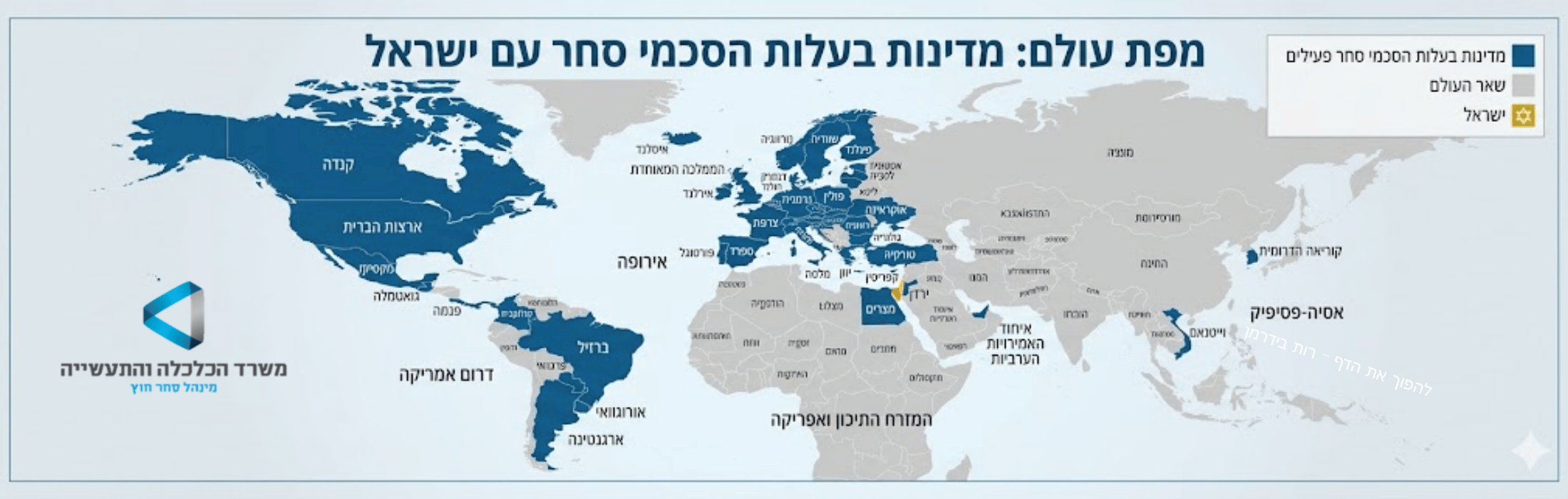
Importing from the United States to Israel: How to Use the FTA in Practice

Quick Article Navigation 01Key Takeaways 02What the FTA Does and Does Not Do 03Rules of Origin 04Invoice Declaration 05Cost Calculation 06East Coast vs. West Coast FOB 07Air vs. Sea Freight 08DDP Pitfalls 09FDA...

https://www.unitedxp.co.il/wp-content/uploads/2026/08/אריזות.png
Packaging and Storage Considerations for Successful International Shipping: A Practical Guide

Packaging and Storage Considerations for Successful International Shipping: A Practical Guide | UnitedXP Packaging and Storage Considerations for Successful International Shipping: A Practical...

https://www.unitedxp.co.il/wp-content/uploads/2026/08/השפעת-שינויים-רגולטוריים-גלובליים-על-יבוא-ויצוא-ישראלי-1.png
The Impact of Global Regulatory Changes on Israeli Imports and Exports

The Impact of Global Regulatory Changes on Israeli Imports and Exports | UnitedXP The Impact of Global Regulatory Changes on Israeli Imports and Exports August 2026  | ...

https://www.unitedxp.co.il/wp-content/uploads/2026/08/עתיד-עמילות-המכס-בישראל-לקראת-מערכת-World-Gate-והטמעת-בינה-מלאכותית.png
The Future of Customs Brokerage in Israel: Toward World Gate and AI Integration

The Future of Customs Brokerage in Israel: Toward World Gate and AI Integration | UnitedXP The Future of Customs Brokerage in Israel: Toward World Gate and AI Integration August 2026...

https://www.unitedxp.co.il/wp-content/uploads/2026/07/מדריך-לבחירת-חברת-שילוח-ועמיל-מכס-10-שאלות-שחייבים-לשאול-2.png
45How to Choose a Freight Forwarder and Customs Broker: 10 Questions You Must Ask

A Practical Guide for Importers and Exporters How to Choose a Freight Forwarder and Customs Broker: 10 Questions You Must Ask Freight cost is only one part of the decision. Your freight forwarder and customs...

https://www.unitedxp.co.il/wp-content/uploads/2026/06/מגמות-מקרו-כלכליות-והשפעתן-על-ענף-השילוח-היבוא-והיצוא.png
Macroeconomic Trends Affecting Shipping, Imports & Exports

In the first half of 2025, the Israeli economy experienced significant volatility, against the backdrop of geopolitical developments, changes in global trade policy, and the implications of local reforms....

https://www.unitedxp.co.il/wp-content/uploads/2026/06/ייבוא-ממזרח-תיכון-מול-מזרח-רחוק.png
Import from Turkey, Greece or Cyprus: Logistics Advantages and Challenges vs. Import from the Far East

allenges vs. Import from the Far East Introduction The Israeli import market is undergoing significant changes. Many companies are re-examining their international shipping strategies. Import from Turkey,...

https://www.unitedxp.co.il/wp-content/uploads/2026/05/המהפכה-הדיגיטלית-של-המכס-הישראלי-כל-מה-שיבואן-חייב-לדעת-ב-2026.png
Israel's Digital Customs Reform 2026: World Gate, NII System, and Sensitive Food Import Regulations

  Israel’s Digital Customs Reform 2026: World Gate, NII System, and Sensitive Food Import Regulations The shift from paper-based manual processes to a fully digital system has transformed...

https://www.unitedxp.co.il/wp-content/uploads/2026/05/משרד-הכלכלה-–-מינהל-סחר-חוץ.png
Free Trade Agreements: How UnitedXP Saves Customs Duties Using EFTA, Canada & UK

Free Trade Agreements | UnitedXP Free Trade Agreements: How UnitedXP Saves Customs Duties Using EFTA, Canada & UK Israel has signed free trade agreements with major economies. These agreements...

https://www.unitedxp.co.il/wp-content/uploads/2026/04/השוואת-עלויות-FCL-מול-LCL-ניתוח-כלכלי-מעמיק-שיסייע-לעסקים-לבחור-את-חלוקת-המכולה-המשתלמת-ביותר.png
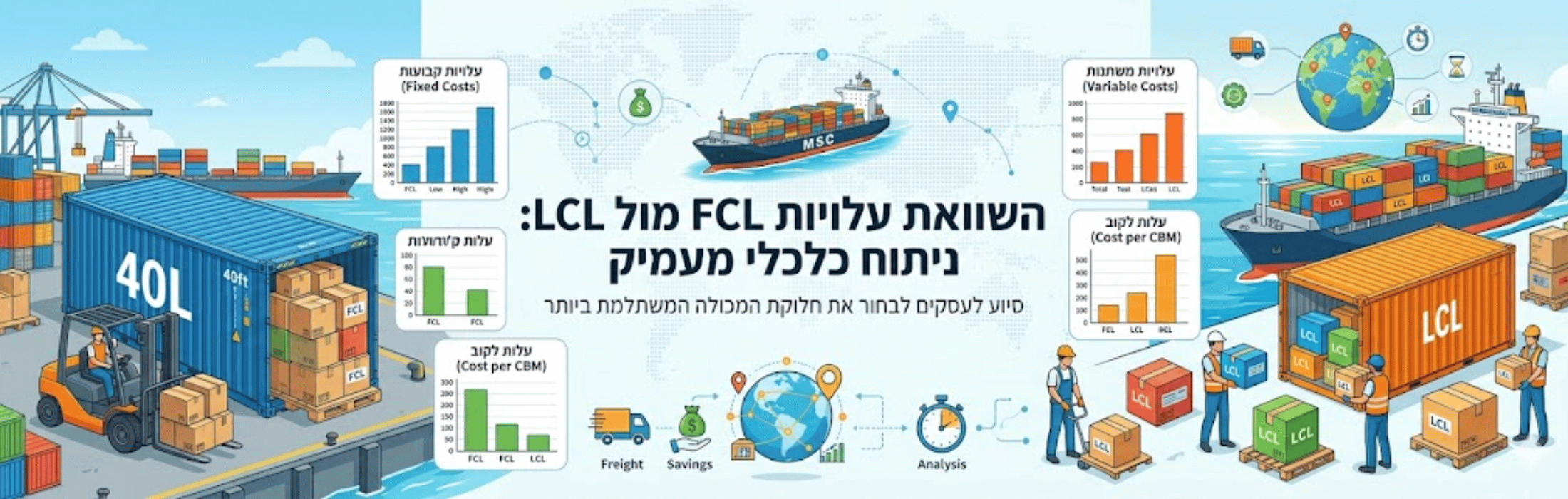
FCL vs LCL Costs: Economic Analysis for Profitable Container Split

Introduction Ocean freight is the backbone of global trade, with over 80% of world trade volume carried by sea. For importers, exporters, and small to medium‑sized businesses, the decision between FCL...

1 2 3 15