








תקציר
Understanding the differences, pros, and cons of each method is essential for making an informed, cost-effective decision.This guide explores both FCL and LCL shipping, helping business owners and supply chain managers choose the best option for their needs. FCL (Full Container Load) refers to a shipping method where a single customer books an entire container, regardless of whether they fill it completely. Lower cost per unit (CBM) – Once you fill a significant portion of the container (usually 50% or more), FCL becomes more economical…
Introduction: A Logistical Decision with Financial Impact
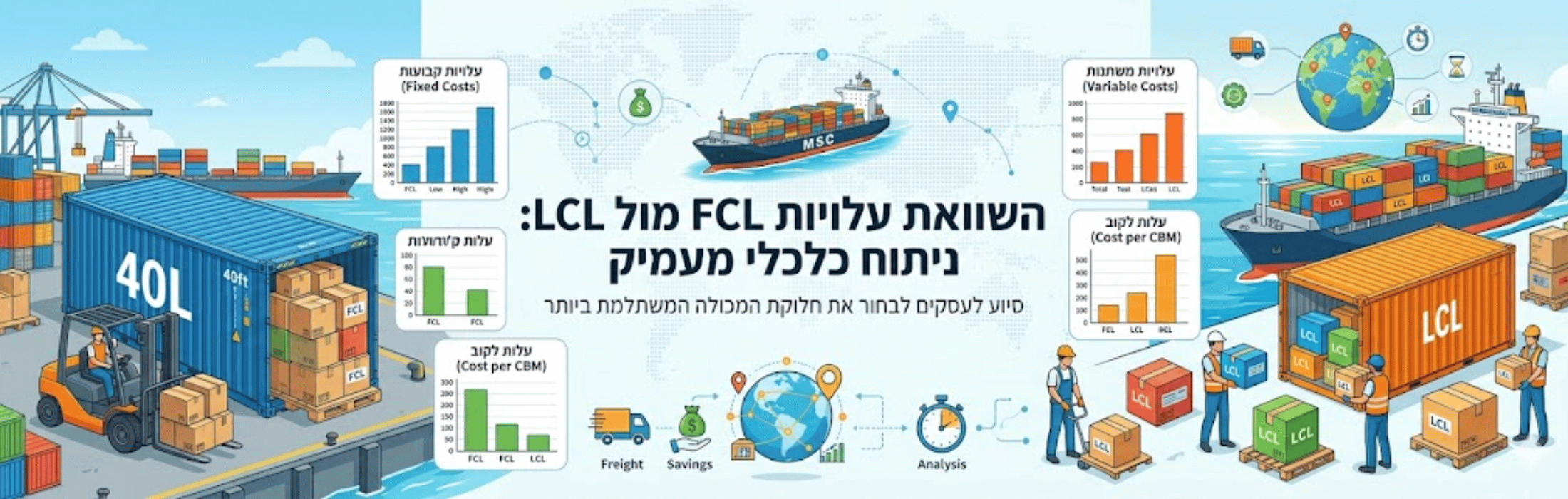
For any importer, the choice between FCL (Full Container Load) and LCL (Less than Container Load) is strategic. It influences not only the final landed cost of goods but also delivery timelines, operational risks, and overall logistics efficiency. Understanding the differences, pros, and cons of each method is essential for making an informed, cost-effective decision.
This guide explores both FCL and LCL shipping, helping business owners and supply chain managers choose the best option for their needs.
What Is FCL and What Is LCL?
FCL (Full Container Load) refers to a shipping method where a single customer books an entire container, regardless of whether they fill it completely. This provides full control over the contents and is common for larger or more sensitive shipments.
LCL (Less than Container Load) involves sharing a container with other importers. Freight is consolidated, and each customer pays only for the volume (CBM) or weight their cargo occupies. It is ideal for smaller businesses or frequent low-volume shipments.
Advantages of FCL Shipping
Lower cost per unit (CBM) – Once you fill a significant portion of the container (usually 50% or more), FCL becomes more economical than LCL.
Lower risk of damage – No mixing with other cargo reduces the risk of contamination or physical damage.
Faster customs clearance – Fewer parties involved means less complexity and potential delays at the port.
Full control over your shipment – Ideal for high-value, sensitive, or custom-packed goods.
Disadvantages of FCL Shipping
Requires a minimum volume to be cost-effective – May not be suitable for small or medium-sized businesses.
Higher upfront investment – Buying in bulk means higher costs in the short term and greater impact on cash flow.
Storage logistics – Receiving a full container requires warehouse space and capacity.
Advantages of LCL Shipping
Cost-effective for small shipments – You pay only for the space you use.
Business flexibility – Ideal for startups or eCommerce businesses with variable demand.
Lower financial risk per shipment – Smaller quantities reduce exposure and allow for more frequent orders.
Disadvantages of LCL Shipping
Potential delays – Shared shipments depend on all parties for consolidation and release.
Higher risk of damage – Cargo may be mixed with other goods, sometimes unsuitable.
Additional handling charges – Deconsolidation, documentation, and warehousing may add extra costs.
FCL vs. LCL – Comparison Table
| Criterion | FCL – Full Container Load | LCL – Less than Container Load |
|---|---|---|
| Cargo Type | Large volume, sensitive goods | Small batches, general cargo |
| Cost per CBM | Lower for large volumes | Higher, especially over 6–8 CBM |
| Risk of Damage | Low – no mixing | Higher – mixed with other goods |
| Customs Release Time | Faster – less complex | Slower – requires group clearance |
| Business Flexibility | Low – requires planning | High – adaptable to changing demand |
| Storage Needs | Significant | Minimal |
| Upfront Investment | High | Low |
When Should You Choose FCL?
If you’re importing large volumes, want maximum control, or need fast and predictable customs processing, FCL is likely the better option. It’s often used by wholesalers, manufacturers, or companies in retail with stable, high-volume supply chains.
When Should You Choose LCL?
LCL is ideal for small or medium businesses, especially those with variable inventory needs or frequent shipments. It suits eCommerce stores, startups, and seasonal businesses looking to avoid excess inventory and lower risk exposure.
Other Considerations: Shipment Frequency and Destination
Shipment frequency plays a major role in deciding:
One-time, high-volume import → FCL is best.
Weekly or monthly low-volume shipments → LCL is usually more efficient.
Destination also matters. For example, LCL to nearby destinations (e.g., Europe from Israel) may be faster and cheaper, but for long-haul routes like Asia, FCL avoids the delays common in shared freight.
Conclusion: Choose What Aligns With Your Business Strategy
Ultimately, the decision between FCL and LCL depends on volume, frequency, budget, sensitivity of goods, and operational capacity. There’s no one-size-fits-all answer—but understanding the logistics behind each model will help you optimize costs and improve the resilience of your supply chain.