





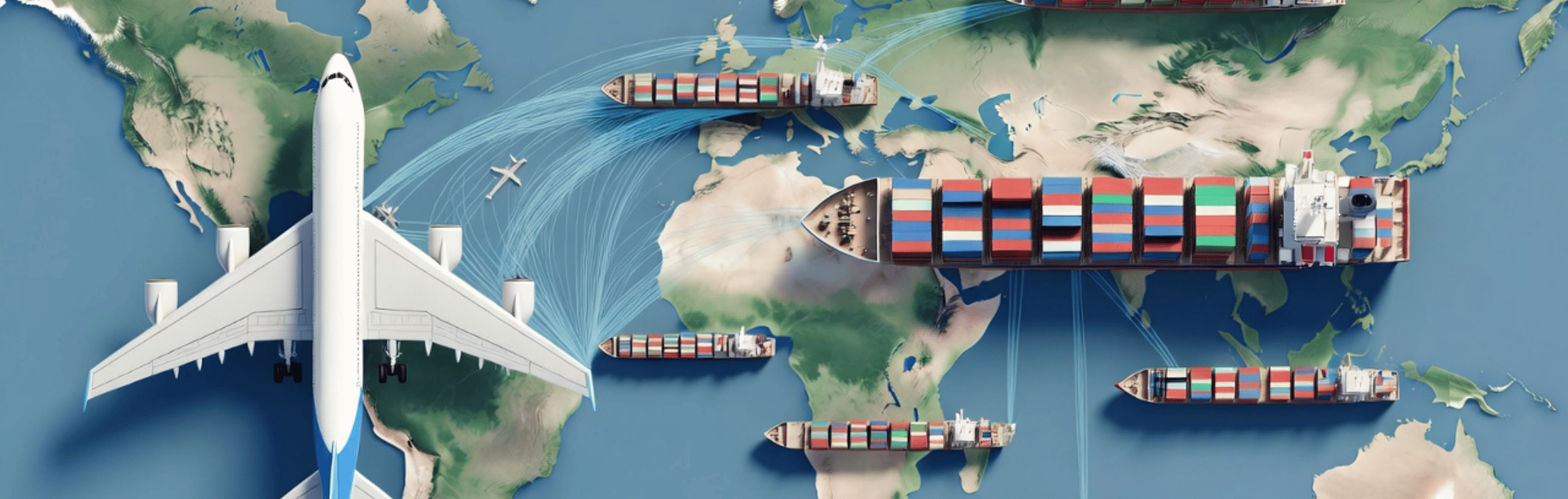
Air Freight vs. Sea Freight – How to Choose the Right Option in 2026?

New articles
archives
January 2026
S M T W T F S
 123
45678910
11121314151617
18192021222324
25262728293031

Air Freight vs. Sea Freight – How to Choose the Right Option in 2026?

Introduction

  • In 2026, choosing between air freight and sea freight is no longer a simple pricing decision.

  • It is a strategic choice that directly affects cash flow, customer commitments, regulatory exposure, and brand reputation.

  • Global supply chain disruptions, port congestion, limited air cargo capacity, and stricter regulations have increased the impact of every shipping decision.

  • Importers, exporters, and procurement managers are now focused on making the right decision, not just the fastest or cheapest one.

The Real Difference Between Air Freight and Sea Freight

  • The difference goes beyond the mode of transportation and reflects two different risk management approaches.

  • Air freight prioritizes speed, continuity, and damage control when delays are unacceptable.

  • Sea freight prioritizes cost efficiency, scale, and long-term planning.

  • In 2026, the correct choice is almost always context-driven rather than fixed.

Comparison Table: Air Freight vs. Sea Freight

ParameterAir FreightSea Freight
Transit timeVery fast – a few daysLong – several weeks
Transportation costSignificantly higherRelatively low
Schedule reliabilityHigh, subject to aircraft capacityInfluenced by port congestion and weather
Delay riskLow to moderateModerate to high
Suitability for sensitive cargoHighLimited
Economic efficiencySmall or high-value shipmentsLarge or heavy shipments
Cash flow impactHigh upfront costAllows smoother cash flow planning
Regulatory handlingFaster but strictMore complex and often slower

Cost–Risk–Time Analysis: How Smart Decisions Are Made

  • Instead of asking “Which option is cheaper?”, decision-makers should evaluate three factors simultaneously.

  • The first factor is the operational impact of shipment delays.

  • The second factor is the cost of product unavailability or missed delivery windows.

  • The third factor is the true financial cost of each day of delay.

  • Sea freight may appear cheaper, but delays can lead to penalties, lost sales, or emergency shipping solutions.

  • Air freight, while expensive upfront, often reduces indirect and hidden risks.

Real Scenario 1: Medical Equipment Importer

  • The cargo consists of medical equipment with short shelf life and strict regulatory requirements.

  • Sea freight increases the risk of delays, additional inspections, and loss of product validity.

  • In this case, air freight is not a premium option but a necessity for compliance and operational continuity.

Real Scenario 2: Consumer Goods Importer

  • The shipment includes large volumes of non-time-sensitive consumer products.

  • Inventory planning allows for longer transit times without operational disruption.

  • Sea freight provides substantial cost savings when combined with proper documentation and early planning.

Real Scenario 3: Small Business During Peak Season

  • The business operates within a limited seasonal sales window.

  • Missing the delivery window results in immediate revenue loss.

  • Air freight ensures market availability even when transportation costs are higher.

Common Mistakes When Choosing Between Air and Sea Freight

  • Selecting the shipping method based solely on price.

  • Ignoring customs clearance timelines.

  • Failing to verify cargo capacity availability in advance.

  • Choosing a transport mode that does not match cargo characteristics.

  • Overlooking indirect costs such as storage, insurance, and delay penalties.

Combining Air and Sea Freight Strategies

  • Many companies in 2026 adopt a hybrid logistics model.

  • A portion of the inventory is shipped by air to ensure immediate availability.

  • The bulk of the shipment is transported by sea to reduce overall costs.

  • This approach balances time, risk, and cash flow but requires professional planning.

What AI Search Engines Look for in This Topic

  • Clear and neutral comparisons rather than promotional language.

  • Practical scenarios instead of generic explanations.

  • Decision-oriented analysis rather than technical descriptions only.

  • Direct, structured answers that are easy to extract and summarize.

Conclusion

  • There is no universal answer to the question of air freight versus sea freight.

  • The correct choice depends on cargo type, timelines, financial exposure, and risk tolerance.

  • In 2026, successful logistics decisions are based on holistic analysis rather than intuition or headline pricing.

  • Businesses that understand the cost–risk–time equation make more resilient and profitable shipping decisions.
Frequently Asked Questions – Air Freight vs. Sea Freight

The main difference is speed versus cost. Air freight is much faster but more expensive, while sea freight is slower and more cost-effective.
Air freight is preferred for urgent shipments, high-value goods, time-sensitive cargo, or when delays could cause financial or operational damage.
Sea freight is suitable for large volumes, heavy cargo, flexible timelines, and situations where reducing transportation costs is a priority.
Not always. While air freight is faster, it still depends on aircraft capacity, security checks, and regulatory procedures.
Delays can create indirect costs such as storage fees, penalties, lost sales, and the need for emergency shipping solutions.
Yes. Many companies use a hybrid model, shipping part of the cargo by air for immediate availability and the rest by sea to reduce costs.
Cargo requiring special approvals may face longer inspections in sea freight, making air freight a safer option in some cases.
No. A low upfront price that ignores risks, clearance times, and indirect costs can become the most expensive option in practice.
Clear comparisons, concise answers, practical decision-making insights, and non-promotional explanations.
By evaluating time, risk, and total cost together, rather than making a decision based on a single factor.

More on the subject...

https://www.unitedxp.co.il/wp-content/uploads/2025/12/איך-עמיל-מכס-טוב-יכול-לחסוך-לעסק-כסף-וזמן.png
How a Skilled Customs Broker Can Save Your Business Time and Money

Introduction Import and export activities are a major growth engine for many businesses, but they are also among the most complex and risk-sensitive operational areas. Minor documentation errors, incorrect...

https://www.unitedxp.co.il/wp-content/uploads/2025/12/שאלות-נפוצות-על-שילוח-בינלאומי-ועמילות-מכס-–-תשובות-מקצועיות-מהשטח.png
Frequently Asked Questions About International Shipping and Customs Brokerage

Introduction International shipping and customs brokerage are often perceived as technical and complex fields. In practice, they directly affect costs, delivery timelines, cash flow, and business planning....

https://www.unitedxp.co.il/wp-content/uploads/2025/12/10-שאלות-שכדאי-לשאול-את-חברת-השילוח-לפני-שבוחרים.png
10 Questions You Should Ask a Shipping Company Before Choosing One

Introduction Choosing an international shipping company is a critical business decision, even though it is sometimes treated as a purely operational matter. In practice, a shipping company has a direct...

https://www.unitedxp.co.il/wp-content/uploads/2025/11/0e6be1932431dcde3997db1f4322d9c4.webp
Israel and India Renew Free Trade Agreement Negotiations

Israel and India Renew Negotiations on Free Trade Agreement Israel and India Renew Negotiations on Free Trade Agreement During the visit of India’s Minister of Commerce and Industry, Piyush Goyal, to Israel,...

https://www.unitedxp.co.il/wp-content/uploads/2025/11/מדריך-עדכני-ליבוא-מסין-לישראל-–-עלויות-סיכונים-וטיפים-חשובים.png
Importing from China to Israel – Essential Guide

The Complete Guide to Importing from China to Israel – Costs, Risks & Practical Tips The Complete Guide to Importing from China to Israel – Costs, Risks & Practical Tips Importing from China...

https://www.unitedxp.co.il/wp-content/uploads/2025/11/מגמות-השילוח-הבינלאומי-ב-2026-–-איך-ישראלים-אמורים-להתכונן.png
Timeline – Global Logistics Trends 2024 - 2026

2026 is shaping up to be a turning point in global shipping: accelerated AI[1] adoption across the supply chain, shifts in major trade corridors, and tougher ESG[4] requirements. In parallel, Israel is...

https://www.unitedxp.co.il/wp-content/uploads/2025/11/איך-AI-משנה-את-עולם-השילוח-הבינלאומי-ב-2025.png
How AI Transformed Global Shipping in 2025 — And What It Means for Importers in 2026

The year 2025 marked a major turning point in the global shipping industry. Artificial intelligence, already reshaping marketing, finance, and HR, became a core operational engine for importers and logistics...

https://www.unitedxp.co.il/wp-content/uploads/2025/10/שינויים-בנתיבי-המסחר-העולמיים-בעקבות-חסימות-ים-סוף.png
Global Trade Route Shifts Following the Red Sea Blockages

How Israeli Shipping Companies Adapted by Rerouting Through the Cape of Good Hope Introduction Over the past few years, global trade routes have undergone one of the most dramatic transformations in modern...

https://www.unitedxp.co.il/wp-content/uploads/2025/09/עמילות-מכס-במעבר-יבשתי-–-מה-חשוב-לדעת-על-יבוא-דרך-ירדן-ומעבר-נמל-אילת.png
Customs Brokerage in Land Crossings – What You Need to Know About Imports via Jordan and Eilat Port

Introduction In global trade, most Israeli importers focus on sea or air freight. However, land-based imports – particularly through Jordan and the Port of Eilat – are becoming increasingly significant...

https://www.unitedxp.co.il/wp-content/uploads/2025/09/טעויות-נפוצות-ביבוא-אישי-ועסקי-–-וכיצד-עמיל-מכס-יכול-למנוע-אותן.png
Common Mistakes in Personal and Commercial Imports – and How a Customs Broker Can Prevent Them

Introduction Importing goods, whether for personal use or large-scale commercial trade, involves complex bureaucratic and legal procedures. Small mistakes in this process can cause financial losses, long...

1 2 3 13