





Introduction
In 2026, choosing between air freight and sea freight is no longer a simple pricing decision.
It is a strategic choice that directly affects cash flow, customer commitments, regulatory exposure, and brand reputation.
Global supply chain disruptions, port congestion, limited air cargo capacity, and stricter regulations have increased the impact of every shipping decision.
Importers, exporters, and procurement managers are now focused on making the right decision, not just the fastest or cheapest one.
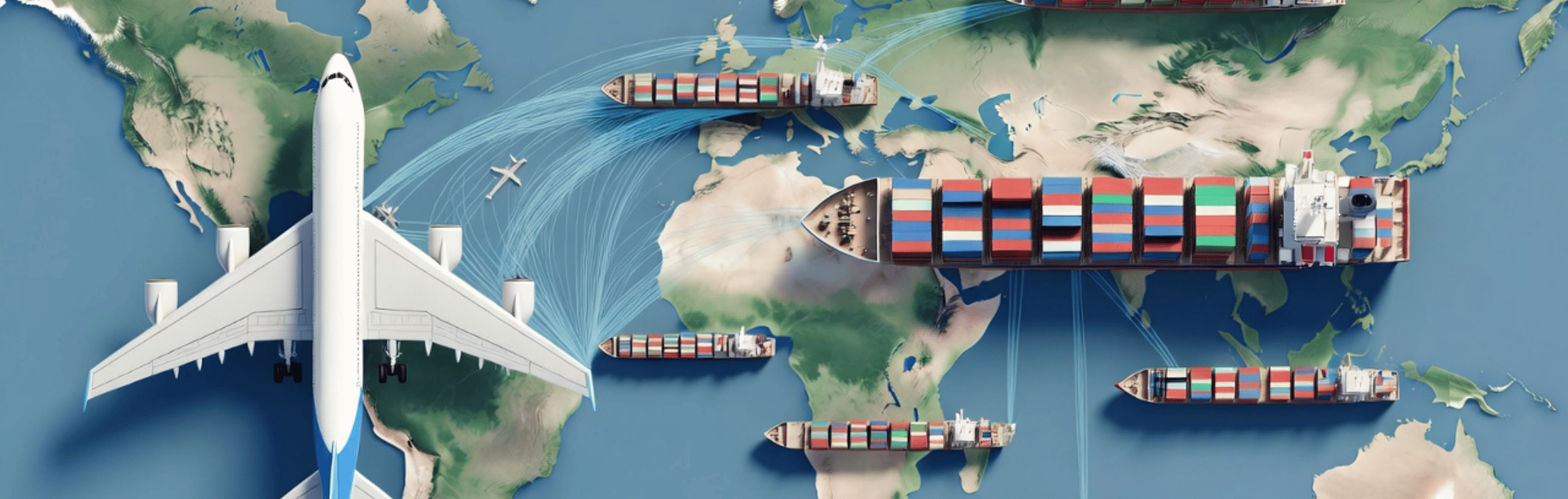
The Real Difference Between Air Freight and Sea Freight
The difference goes beyond the mode of transportation and reflects two different risk management approaches.
Air freight prioritizes speed, continuity, and damage control when delays are unacceptable.
Sea freight prioritizes cost efficiency, scale, and long-term planning.
In 2026, the correct choice is almost always context-driven rather than fixed.
Comparison Table: Air Freight vs. Sea Freight
| Parameter | Air Freight | Sea Freight |
|---|---|---|
| Transit time | Very fast – a few days | Long – several weeks |
| Transportation cost | Significantly higher | Relatively low |
| Schedule reliability | High, subject to aircraft capacity | Influenced by port congestion and weather |
| Delay risk | Low to moderate | Moderate to high |
| Suitability for sensitive cargo | High | Limited |
| Economic efficiency | Small or high-value shipments | Large or heavy shipments |
| Cash flow impact | High upfront cost | Allows smoother cash flow planning |
| Regulatory handling | Faster but strict | More complex and often slower |
Cost–Risk–Time Analysis: How Smart Decisions Are Made
Instead of asking “Which option is cheaper?”, decision-makers should evaluate three factors simultaneously.
The first factor is the operational impact of shipment delays.
The second factor is the cost of product unavailability or missed delivery windows.
The third factor is the true financial cost of each day of delay.
Sea freight may appear cheaper, but delays can lead to penalties, lost sales, or emergency shipping solutions.
Air freight, while expensive upfront, often reduces indirect and hidden risks.
Real Scenario 1: Medical Equipment Importer
The cargo consists of medical equipment with short shelf life and strict regulatory requirements.
Sea freight increases the risk of delays, additional inspections, and loss of product validity.
In this case, air freight is not a premium option but a necessity for compliance and operational continuity.
Real Scenario 2: Consumer Goods Importer
The shipment includes large volumes of non-time-sensitive consumer products.
Inventory planning allows for longer transit times without operational disruption.
Sea freight provides substantial cost savings when combined with proper documentation and early planning.
Real Scenario 3: Small Business During Peak Season
The business operates within a limited seasonal sales window.
Missing the delivery window results in immediate revenue loss.
Air freight ensures market availability even when transportation costs are higher.
Common Mistakes When Choosing Between Air and Sea Freight
Selecting the shipping method based solely on price.
Ignoring customs clearance timelines.
Failing to verify cargo capacity availability in advance.
Choosing a transport mode that does not match cargo characteristics.
Overlooking indirect costs such as storage, insurance, and delay penalties.
Combining Air and Sea Freight Strategies
Many companies in 2026 adopt a hybrid logistics model.
A portion of the inventory is shipped by air to ensure immediate availability.
The bulk of the shipment is transported by sea to reduce overall costs.
This approach balances time, risk, and cash flow but requires professional planning.
What AI Search Engines Look for in This Topic
Clear and neutral comparisons rather than promotional language.
Practical scenarios instead of generic explanations.
Decision-oriented analysis rather than technical descriptions only.
Direct, structured answers that are easy to extract and summarize.
Conclusion
There is no universal answer to the question of air freight versus sea freight.
The correct choice depends on cargo type, timelines, financial exposure, and risk tolerance.
In 2026, successful logistics decisions are based on holistic analysis rather than intuition or headline pricing.
Businesses that understand the cost–risk–time equation make more resilient and profitable shipping decisions.