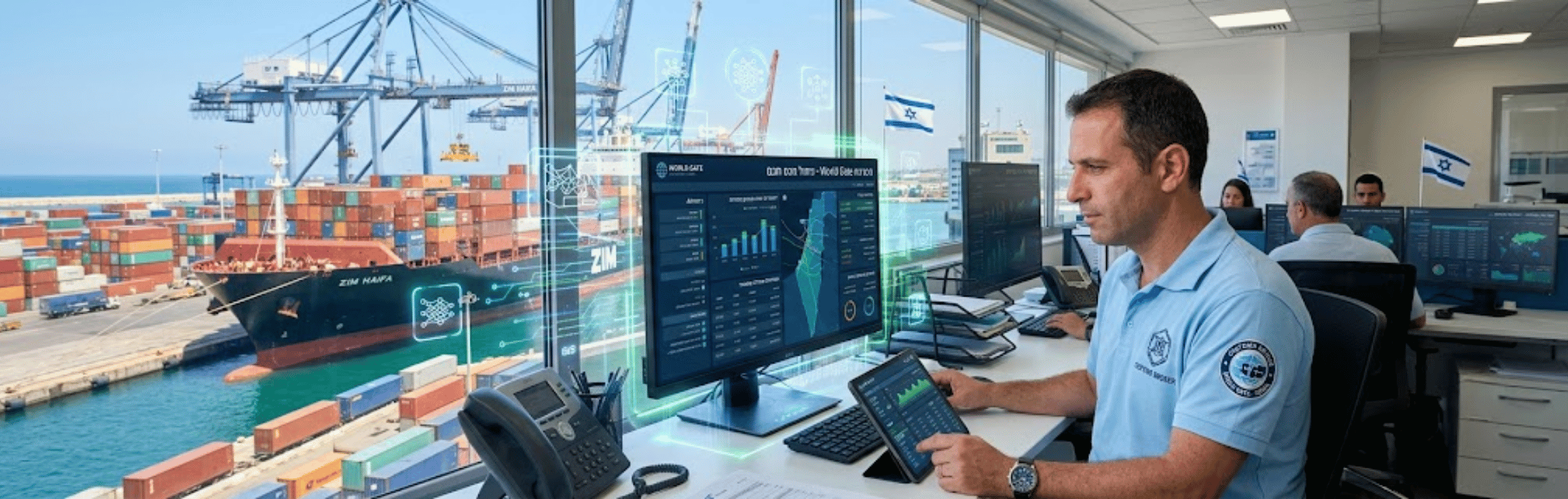




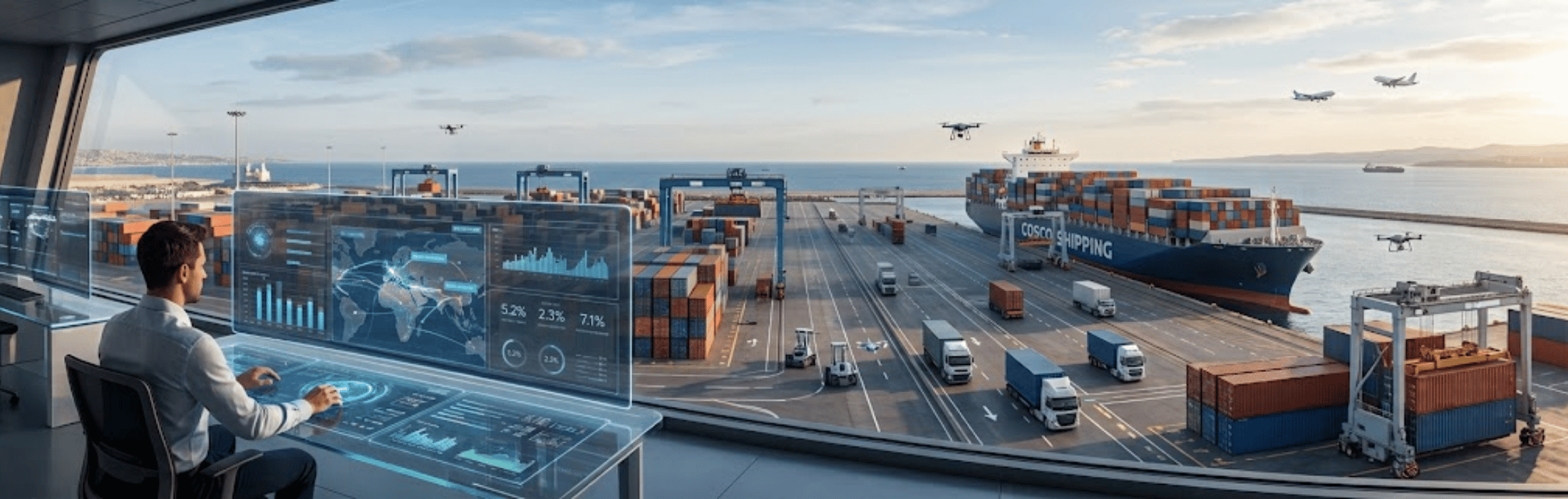
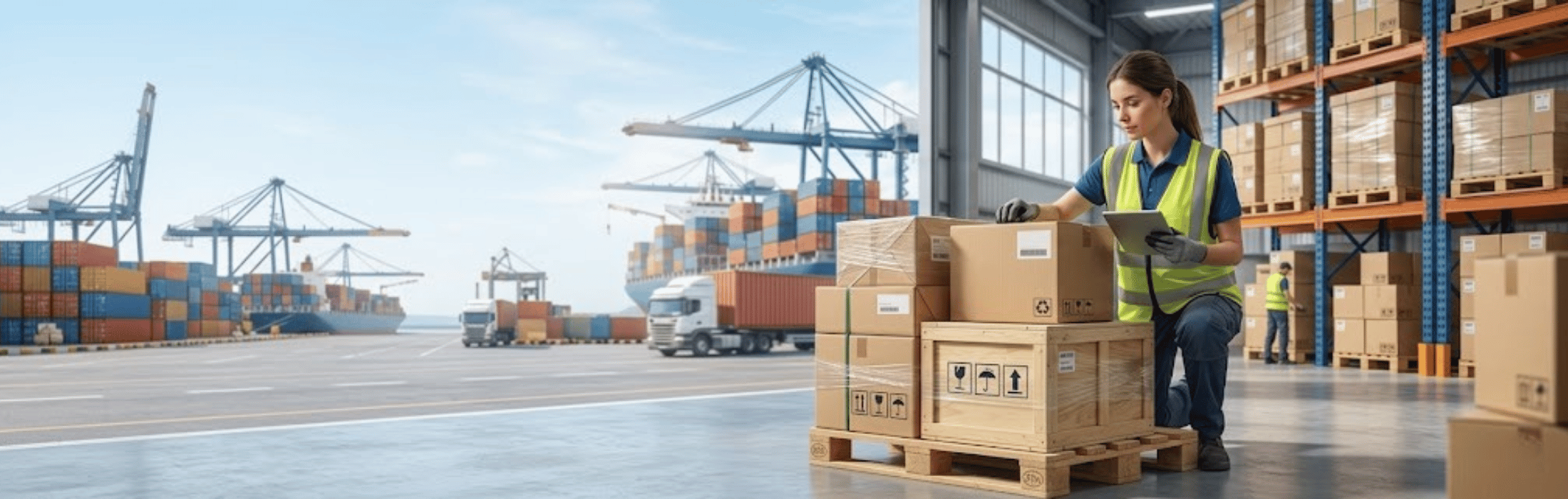
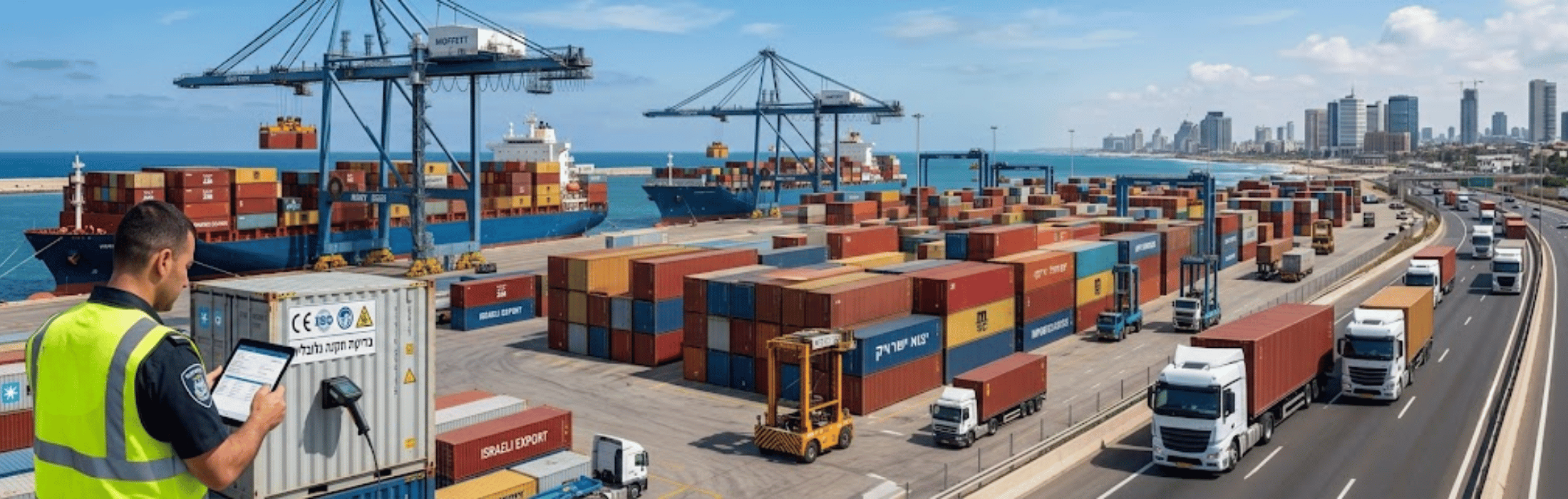
2026 is shaping up to be a turning point in global shipping: accelerated AI[1] adoption across the supply chain, shifts in major trade corridors, and tougher ESG[4] requirements. In parallel, Israel is strengthening its role as a regional node thanks to location, seaports, and air links. This article outlines the key trends, how they affect imports and exports from Israel, and practical steps to prepare.
Key Global Trends for 2026
AI-Driven Automation & Forecasting[1]
Models for demand forecasting, route optimization, and real-time inventory control. A shift from reactive firefighting to proactive operations.
Focus: data consolidation, API integrations, and end-to-end visibility[5].
Shifting Trade Routes
Temporary and permanent rerouting driven by geopolitics and extreme weather. More alternative corridors and new sub-routes.
An opportunity for Israel to serve as a regional hub[6] for re-routing and cross-docking.
Green Logistics & Regulation[4]
Tighter emission standards, transparent reporting, and packaging/material compliance. Buyers increasingly prefer sustainable suppliers.
Procurement will favor partners with auditable emission data and control processes.
Digital Infrastructure
Adoption of Digital Twin[2] for the supply chain and end-to-end[3] platforms covering operations, customs, and Incoterms[7].
Shorter lead times, better risk reduction, and improved scheduling.
Impact on Imports & Exports from Israel
For Israeli businesses this means greater transparency, regulatory readiness, and operational agility. Good preparation reduces customs delays, balances cost/time, and builds reliability for overseas customers.
- Costs & Schedules: Corridor volatility requires plan-B routing and a clear sea vs. air comparison.
- Regulatory Resilience: Emission evidence, accurate declarations, and precise classification prevent physical inspections and delays.
- Digitization: Real-time tracking systems, KPI reporting, and data sharing with carriers and port stakeholders.
- Israel as a Node: Combining port, air, and road enables shorter lead times to MENA markets.
2025 vs. 2026 – Comparison
| Dimension | 2025 Snapshot | 2026 Outlook |
|---|---|---|
| Data & Decisions | Partial data; siloed dashboards | Unified real-time data; AI-assisted decisions[1] |
| Trade Routes | High reliance on legacy chokepoints | Diversified backups; stronger regional nodes |
| Operational Tech | Point automation | End-to-end[3] platforms with Digital Twin[2] |
| Regulation & Sustainability | Varying requirements across markets | Stricter standards and ESG alignment[4] |
| Israel’s Positioning | Secondary junction | Regional hub[6] with speed and flexibility |
Practical Tips for Israeli Importers & Exporters
Unify Data & Improve Visibility[5]
Connect systems to carriers, ocean lines, and customs brokers. End-to-end control reduces surprises.
Track KPIs: cycle time, on-time rate, customs release time.
Build Route Scenarios & Alternatives
Plan B/C: SeaAirConsolidation. Compare cost–time–risk.
For critical projects, split shipments to lower risk.
Tighten Compliance
Accurate classification, complete documentation, packaging to standards. Update Incoterms[7] in contracts.
Prevents inspections, storage, and penalties.
Embed ESG in Pricing & Tenders[4]
Measure emissions and require supplier data. Include reduction targets in proposals.
An advantage in international tenders and global chains.
Conclusion
The coming year brings deeper change: more technology, more transparency, and more environmental responsibility — along with new opportunities. Israeli firms that unify data, improve forecasting, and design route alternatives will gain a clear competitive edge in 2026.
Footnotes (English Terms)
- AI — Artificial Intelligence: analytics, prediction, and automation in logistics processes.
- Digital Twin — A virtual replica of a physical asset/process enabling simulation and real-time monitoring.
- End-to-End — Managing the entire flow from pickup to final delivery, including customs and documentation.
- ESG — Environmental, Social, Governance: a framework assessing sustainability and governance practices.
- Visibility — Continuous tracking of shipment location, status, and cycle times across the chain.
- Hub — A regional logistics node for consolidation, sorting, and re-distribution.
- Incoterms — International commercial terms defining risk, cost, and responsibility between buyer and seller.
Global Shipping Trends 2026 – FAQ
Short, clear answers on how 2026 trends affect imports/exports from Israel — plus practical readiness tips.
1 What are the top global trends heading into 2026?
Faster AI adoption for forecasting and optimization, shifting trade routes due to geopolitics/weather, stricter ESG and emission transparency, and full-chain digitization (including Digital Twins).
2 How will this impact Israeli importers specifically?
Greater need for real-time visibility, tighter compliance (classification and documentation), and agility to switch between sea/air routes. The payoff: fewer delays and hidden costs.
3 Should we shift from sea to air in 2026?
Not automatically. It depends on cargo value, timeline, and route risk. For high-value or time-critical goods, air may be best; in many cases, sea with split or backup routing is more efficient.
4 Which documents matter most to avoid customs delays?
Accurate commercial invoice, detailed packing list, certificate of origin if applicable, and correct classification. Clear Incoterms in contracts help prevent disputes.
5 What does ESG mean for my shipping operations?
Partners increasingly require emission data and clear sustainability practices. Transparent reporting and reduction targets improve tender success and reduce regulatory friction.
6 How can AI help me right now?
Demand and congestion forecasting, dynamic pricing, optimal routing, and early bottleneck alerts. Unifying data across systems delivers true end-to-end control.
7 Is Israel really becoming a regional hub — and how do we leverage it?
Upgraded ports/air links enable hub-and-spoke strategies. Use consolidation, advanced warehousing, and combined sea-air-road links to cut lead times across MENA markets.
8 How do we prepare for climate-driven route disruptions?
Maintain plan-B corridors, track forecasts and port advisories, and keep a backup carrier. For critical deliveries, split shipments to reduce risk.
9 What should we update in 2026 contracts?
Incoterms, SLA targets, dynamic cost-adjustment clauses, agreed backup routes, and obligations to share emission/status data. This reduces disputes and delays.
10 How can UnitedXP support our 2026 readiness?
We implement end-to-end visibility, design route scenarios (sea/air/split), strengthen customs readiness, and connect your data for AI-ready operations — with hands-on, door-to-door support.
Timeline – Global Logistics Trends 2024–2026
A concise overview of the key milestones in international shipping: from the automation wave of 2024, through trade disruptions and alternative routes in 2025, to 2026, where AI and ESG become true growth engines.
-
20242024 Initial Automation
Early Automation in the Supply Chain
Initial adoption of automation tools: smart scanning, automated status updates, and basic data consolidation between suppliers and ports.
- Implementation of basic RPA processes to reduce manual errors.
- Standalone dashboards – data exists but remains siloed.
- Early Visibility achieved only at limited checkpoints.
-
20252025 Trade Disruptions & Route Diversification
Trade Disruptions – Shifting Toward Flexibility
Geopolitical tensions and extreme weather drive rerouting, increased use of backup routes (sea/air/land), and tighter SLA enforcement with vendors.
- Scenario planning (Plan B/C): splitting shipments across sea and air.
- Enhanced tracking systems for early bottleneck alerts.
- Updating contracts and Incoterms to reflect multi-route strategies.
-
20262026 AI & ESG as Growth Engines
AI and ESG – End-to-End Transformation
Transition toward proactive, AI-driven logistics: real-time unified data, mandatory emission reports, and Digital Twin modeling for planning and optimization.
- Demand forecasting, dynamic pricing, and optimal routing powered by AI.
- Full end-to-end Visibility for customers and suppliers.
- Israel emerges as a regional Hub, cutting Lead Time to nearby markets.