








תקציר
In a world where time is a critical resource and customers demand fast, accurate deliveries, refrigerated freight transportation has become one of the most complex challenges in modern logistics. Any failure to preserve the right temperature can result in spoiled goods, health hazards, insurance claims, and significant financial losses.In this article, we’ll explore the principles of cold freight logistics, regulatory requirements, key technologies, and practical tips for ensuring safe and efficient transportation of sensitive goods. Air freight involving pharmaceuticals or sensitive items must follow strict…
Introduction
In a world where time is a critical resource and customers demand fast, accurate deliveries, refrigerated freight transportation has become one of the most complex challenges in modern logistics. Products such as food, pharmaceuticals, vaccines, chemicals, and even cosmetics depend on strict temperature control throughout the entire shipping process.
Unlike standard cargo, where preserving the physical condition is enough, cold chain logistics requires maintaining a specific climate — often with precision within a single degree. Any failure to preserve the right temperature can result in spoiled goods, health hazards, insurance claims, and significant financial losses.
In this article, we’ll explore the principles of cold freight logistics, regulatory requirements, key technologies, and practical tips for ensuring safe and efficient transportation of sensitive goods.
Why Is Refrigerated Transport Necessary?
Fresh and Frozen Food
Dairy products, meat, fish, vegetables, and ready-made meals require tight temperature ranges of 0–5°C or even deep freezing.
Medications and Vaccines
Many require a constant 2–8°C range, with some needing sub-zero or light-protected conditions (e.g., mRNA-based vaccines).
Cosmetics and Personal Care Products
Some are highly sensitive to oxidation or chemical breakdown when not kept cool.
Industrial and Chemical Supplies
Solutions, reagents, paints, or biological samples require thermal stability across the entire distribution process.
Regulatory and Compliance Framework
Ministry of Health (Israel)
Requires special licensing for transporting food and medical products, including certified equipment and temperature logs.
GDP (Good Distribution Practice)
Covers the storage and distribution of medicinal products, including real-time monitoring, deviation alerts, and documentation.
HACCP for Food Logistics
Defines risk points, critical control metrics (temperature, sealing, documentation), and requires structured temperature logging.
International Standards (IATA, WHO)
Air freight involving pharmaceuticals or sensitive items must follow strict protocols, including insulated containers and onboard sensors.
Cold Chain Logistics Technologies
Smart Refrigerated Trucks
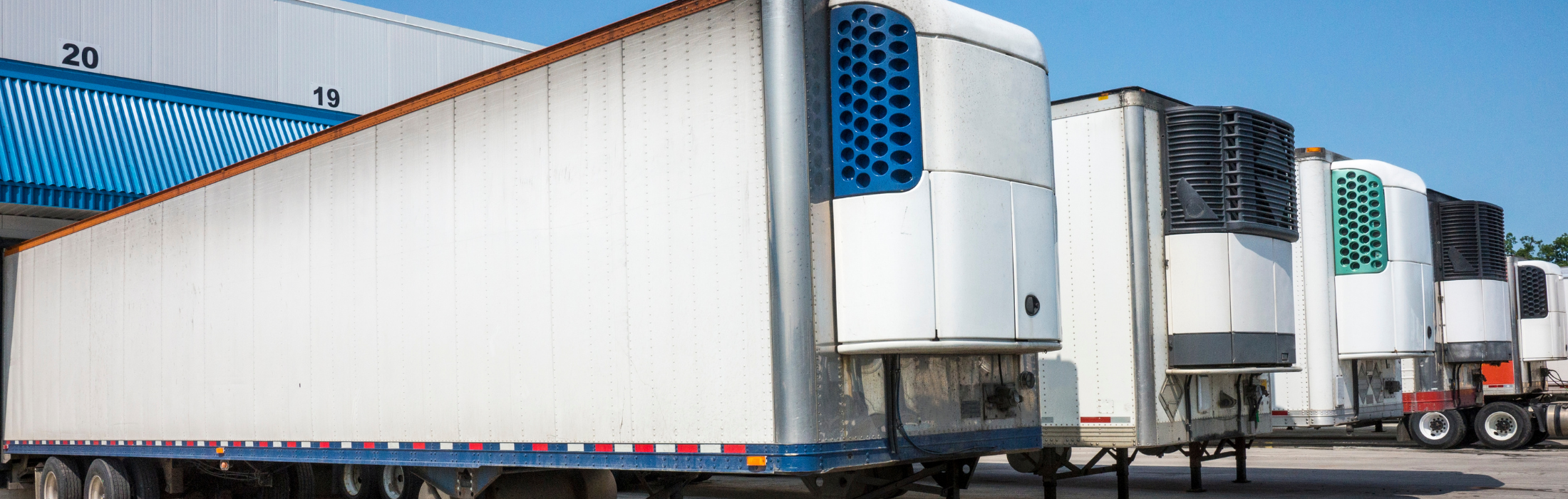
Equipped with independent cooling systems, thermal sensors, alerts, and historical temperature tracking.
Wireless Temperature Sensors
Placed directly in packages or pallets, transmitting real-time data to apps or TMS platforms.
Thermal Insulated Packaging
EPS boxes, cooling gels, and innovative solutions that maintain temperatures for hours without external cooling.
Blockchain and Digital Records
Secure digital logs of temperature data throughout the supply chain — verifiable, tamper-proof, and auditable.
Common Mistakes in Cold Freight — And How to Avoid Them
Mistake: Relying solely on driver feedback
Solution: Use autonomous monitoring systems with real-time alerts and logs.
Mistake: Loading/unloading in unshaded areas
Solution: Always transfer in shaded or climate-controlled zones, especially in summer.
Mistake: Not verifying temperature documentation
Solution: Require signed proof of temperature compliance upon delivery.
Mistake: Using non-refrigerated trucks with dry ice
Solution: Always use certified refrigerated vehicles; improvised methods are risky and often non-compliant.
Mistake: No appropriate insurance coverage
Solution: Secure policies that include temperature deviations and environmental damage.
Table: Key Components in Cold Chain Transport
| Component | Function | Best Practices |
|---|---|---|
| Refrigerated Truck | Maintains constant temperature | Ensure proper maintenance, sealing, and logging |
| Monitoring System | Real-time temperature tracking | Must include alert mechanisms and data history |
| Insulated Packaging | Protection during transfers | Use gel packs, EPS foam, or thermal wraps |
| Cargo Insurance | Financial coverage | Include temperature deviation as a named risk |
| Regulatory Compliance | Fulfilling legal requirements | GDP, HACCP, Health Ministry protocols |
| Driver Training | Minimizing human error | Drivers must be trained in cold chain handling |
Practical Tips for Safe Transport
Demand signed documentation showing temperature ranges throughout the journey
Coordinate precise delivery times to minimize outdoor exposure
Ensure service networks for emergency cooling system repairs
Choose carriers with advanced TMS platforms and traceability
Don’t skip comprehensive insurance — even if it’s more expensive
Summary
Cold chain freight isn’t a luxury — it’s a legal and operational necessity for companies transporting sensitive goods that affect public health and safety.
Even the smallest breakdown in the supply chain can lead to massive spoilage, reputational damage, and financial risk. Success depends on proactive planning, selecting the right suppliers, and ensuring every stage — from warehouse to doorstep — is tightly managed and documented.
In cold freight logistics, success doesn’t begin with the truck — it begins with the plan.