





Fast Customs Clearance – How to Choose a Customs Broker Who Knows How to Shorten Processes

New articles
archives
March 2026
S M T W T F S
1234567
891011121314
15161718192021
22232425262728
293031  

Fast Customs Clearance – How to Choose a Customs Broker Who Knows How to Shorten Processes

Introduction

In today’s fast-paced world of import and export, time is not only money – it is also a crucial competitive advantage. Many businesses discover that slow customs clearance can cause direct financial losses: unnecessary storage costs, supply chain disruptions, and even the risk of losing deals. This is where a professional customs broker comes into play, managing the clearance process quickly, efficiently, and in full compliance with the law.

Choosing the right customs broker is not a minor decision – it can determine whether your goods are released within hours or delayed for several days.

This article explores the importance of fast customs clearance, the common barriers that slow down the process, and practical tips for choosing a customs broker who knows how to shorten procedures with Israeli Customs.

Why Is Fast Customs Clearance Important?

Fast clearance ensures business continuity and provides:

  • Quick market entry and competitive edge.

  • Savings on port and warehouse storage costs.

  • Reduced risk of damaged goods, especially for sensitive products like food or pharmaceuticals.

  • Improved customer experience thanks to shorter delivery times.

Key Barriers to Customs Clearance

  1. Incorrect product classification – wrong HS codes can lead to extra documentation requests and delays.

  2. Missing documents – health certificates, standards approvals, agriculture permits, etc.

  3. Security checks – random inspections or suspicions of non-compliance.

  4. Tax calculation errors – mistakes in duties, VAT, or levies may block clearance.

  5. Limited access to Customs authorities – importers handling clearance alone often face long queues and bureaucracy.

How to Choose a Customs Broker Who Can Shorten Processes

Proven Experience

Work with a broker who has broad experience in various industries (electronics, food, textiles, heavy industry). This ensures familiarity with regulatory requirements and paperwork.

Digital Systems

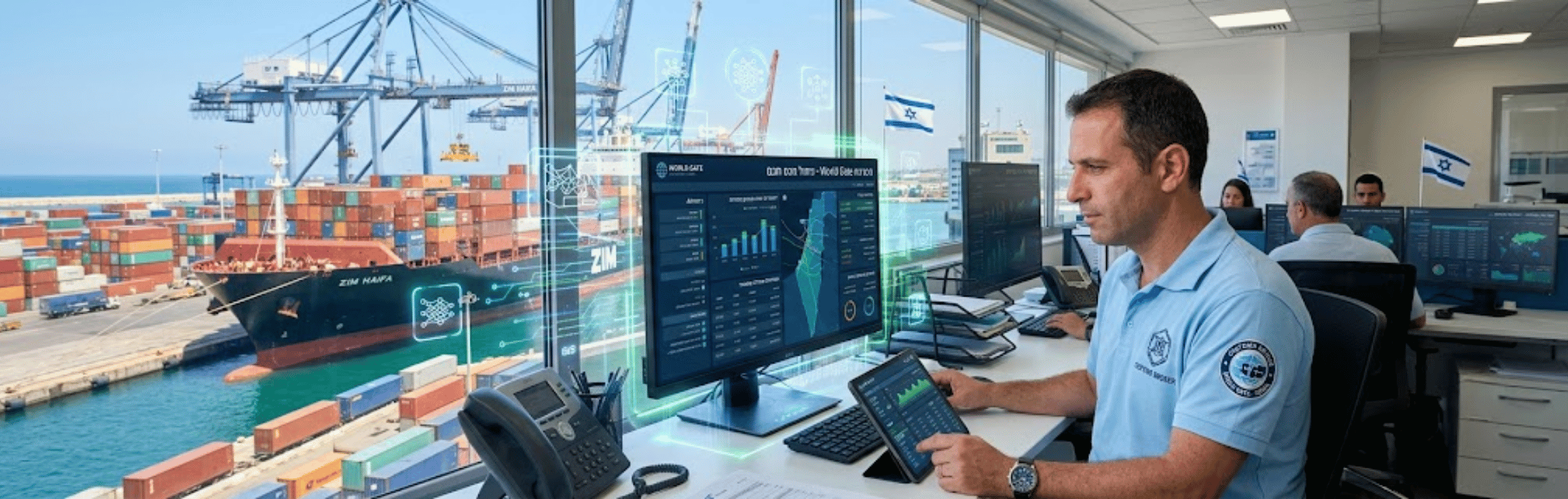
Choose a broker who uses digital systems and is directly connected to Israel Customs’ “Global Gate” (Sha’ar Olamí) platform. This allows online submission, real-time tracking, and faster processing.

Direct Links with Authorities

Long-standing relationships with Customs officials are a major advantage. An experienced broker knows whom to contact to resolve issues quickly.

Reputation and Trust

Look for a broker with a strong reputation among clients and authorities. Testimonials and references from other importers are excellent indicators.

Table: Independent Clearance vs. Clearance with a Customs Broker

CriteriaIndependent ClearanceClearance with Professional Broker
Processing timeLong – several daysShort – hours to one day
Storage costsHighReduced thanks to faster release
Regulatory knowledgeLimitedBroad and up-to-date
Risk of mistakesHighLow
Relationship with authoritiesMinimalDirect and ongoing
Client reliabilityMay sufferMaintained due to on-time delivery

Practical Tips for Choosing a Customs Broker

  • Confirm experience in your product category.

  • Ensure they use advanced IT systems linked to Customs.

  • Ask for references and client testimonials.

  • Verify they provide transparent communication and regular updates.

  • Check for backup solutions in case of strikes, port closures, or security events.

Professional Conclusion

Selecting a customs broker is not just an administrative step – it is a strategic business decision. Fast customs clearance provides a competitive edge, financial savings, and operational peace of mind. A skilled broker combines hands-on experience, digital tools, strong relationships with Customs, and a solid reputation – all of which guarantee quicker release of goods.

For any business engaged in imports, large or small, investing in the right customs broker will deliver measurable returns and long-term advantages.

FAQ

How does a customs broker speed up clearance?
By accurate classification, digital submission through Global Gate, pre-checking documents before arrival, and responding quickly to Customs requirements.
What experience should you require from a broker?
Proven experience in similar industries (food, cosmetics, electronics, industrial goods), knowledge of permits, and ability to handle urgent shipments.
What role do digital systems play?
They enable integration with Customs, automated data entry, real-time tracking, fewer mistakes, and faster processing.
How do you check a broker’s reputation?
Ask for client references, check response times, transparency of costs, and percentage of Customs requests for corrections.
Which documents must be ready in advance?
Invoice, packing list, bill of lading, regulatory permits (according to product type), and importer’s declaration.
How to avoid delays from incorrect classification?
By verifying HS Codes in advance, checking duties/levies, and ensuring compliance with Israeli and international standards.
What’s the difference between DIY clearance and using a broker?
DIY requires regulatory expertise and takes longer; a broker reduces waiting times, lowers risks, and manages direct contact with Customs.
How to handle a security hold or physical inspection?
The broker coordinates inspection schedules, provides missing documents, and communicates with officials to minimize storage costs.
Can clearance be accelerated for express or postal shipments?
Yes. Correct value declaration, accurate classification, and pre-prepared documents speed up express and postal clearance as well.
What SLA should you expect from a broker?
Defined response times, proactive updates, availability during port hours, and delivery deadlines by shipment type (air/sea, green/yellow/red channel).